
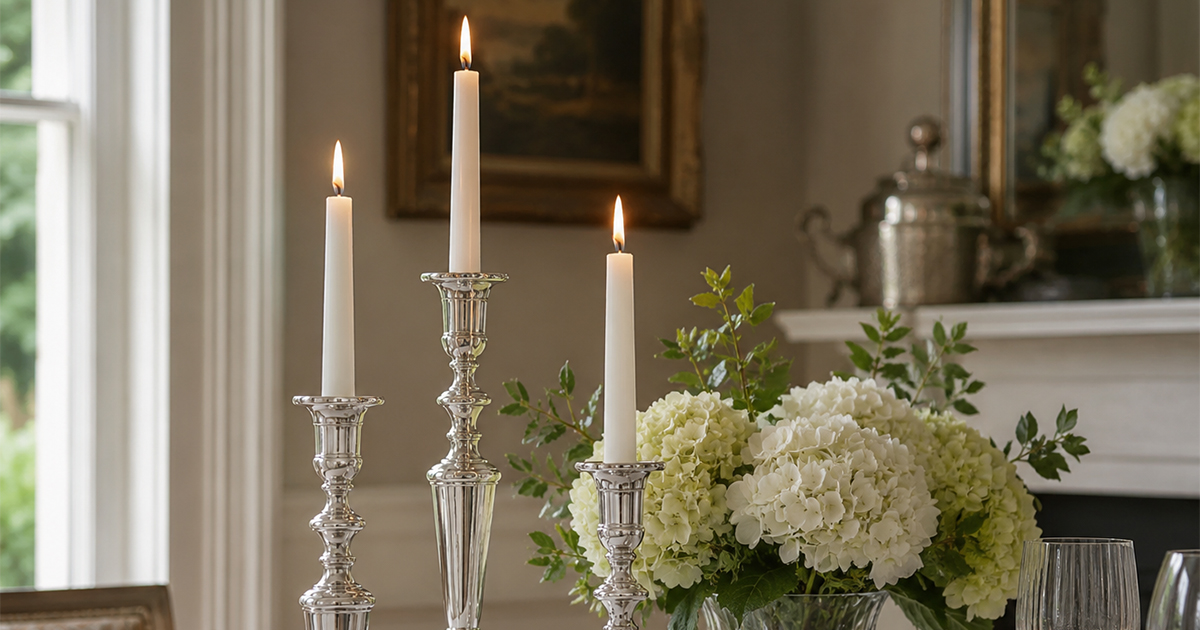
Silver candlesticks are often kept long after they stop being used. They may sit on a mantel, remain wrapped in a storage box, or arrive as part of an inheritance with little information attached. Some are elegant table pieces with decorative value. Others are sterling silver objects that may be worth selling for their precious metal content. The challenge is that candlesticks are not always as straightforward to value as flatware, jewelry, or coins.
If you want to sell silver candlesticks, the first step is to determine whether they are sterling silver, silver-plated, weighted sterling, or another silver-bearing alloy. That single distinction can change where you sell them, how they are evaluated, and what kind of offer you should expect.
Why Silver Candlesticks Are Different
Candlesticks are built for stability. Many were made with broad bases, reinforced stems, or added internal material to keep them from tipping over. Because of that, a silver candlestick’s total weight may not represent its silver value.
Some sterling candlesticks are marked “weighted,” “cement filled,” “reinforced,” or similar terms. These pieces may have a sterling silver exterior but include plaster, resin, pitch, steel rods, or other filler inside. A pair may feel heavy in the hand, but only part of that weight may be actual silver.
Other candlesticks are silver plated. These have a thin layer of silver over a base metal. They can still be attractive and useful, but they usually have much less precious metal value than sterling silver.
Why People Sell Silver Candlesticks
People sell silver candlesticks for many reasons. They may be inherited, mismatched, tarnished, dented, or no longer suited to the owner’s home. Some people sell because they are downsizing. Others are settling an estate, clearing storage, or converting unused household objects into cash.
Candlesticks can also be awkward to keep. They take up room, require polishing, and may be too formal for everyday use. A single candlestick from a missing pair may have limited decorative appeal, but it could still contain silver. A damaged or weighted sterling candlestick may not attract a retail buyer, yet it may still be worth appraising.
How to Identify Silver Candlesticks
Start by looking for marks. The base is the most common place to check, but markings may also appear along the stem, around the rim, or underneath removable parts. Look for words or numbers such as “sterling,” “925,” “.925,” “900,” “800,” “825,” “830,” or “850.”
Marks such as EP, EPNS, electroplate, silver on copper, or silver plate generally indicate plated material. These items may be best sold as décor, vintage goods, or usable candleholders rather than as precious metal.
Also look for words like “weighted” or “reinforced.” A sterling mark is important, but a weighted mark means the piece contains non-silver material. That does not make it worthless. It simply means the silver value must be calculated differently.
How Silver Candlesticks Are Valued
A buyer will usually consider silver purity, recoverable silver weight, construction, condition, and resale appeal.
Purity refers to the silver standard. Sterling silver is 92.5% silver. Other marks may indicate lower silver content. A silver plate contains only a thin layer of silver and is valued differently.
Recoverable silver weight is the key issue with candlesticks. If the piece is solid sterling, valuation may be more direct. If it is weighted, filled, or reinforced, the buyer may need to estimate or separate the silver from the filler. That process affects the offer.
Condition also matters. Dents, splits, missing bobeches, bent stems, wax residue, or heavy tarnish may reduce decorative resale value. For a precious metals buyer, those issues may matter less than metal content. For an antique dealer or collector, maker, age, design, matching pairs, and condition may matter a great deal.
Where to Sell Silver Candlesticks
A precious metals buyer may be the right choice if the candlesticks are sterling silver and the main value is metal content. This can be especially practical for weighted, damaged, incomplete, or heavily tarnished pieces.
An antique dealer may be a better fit if the candlesticks are old, decorative, signed by a desirable maker, or part of a matched pair. Some candlesticks have more value as finished objects than as silver by weight.
An auction house may be useful for higher-end antique examples, especially when maker, provenance, design period, or rarity could attract collectors.
Online marketplaces can work for plated candlesticks, decorative pairs, vintage styles, or pieces with strong visual appeal. This route requires good photos, accurate measurements, condition notes, and careful shipping.
Local estate sales, consignment shops, and vintage dealers may also work well for decorative candlesticks, especially if they are attractive but not valuable enough for a specialty sale.
Why Sell to APMEX?
APMEX can be a practical option when your candlesticks are pure silver, sterling silver, or qualifying silver décor. We accept old gold and silver items, including silverware and décor that is pure or sterling silver. Sellers can request a free appraisal kit, use a prepaid shipping label insured up to $5,000, receive an appraisal and offer, and get paid within one business day after accepting. If the offer is declined, the items can be returned. For sellers who want a straightforward precious-metals appraisal rather than local guesswork, we provide a clear process for qualifying silver items.
Should You Clean Them First?
Do not aggressively polish silver candlesticks before selling. Lightly removing dust or wax is fine, but heavy polishing can soften decorative details, reduce antique appeal, or damage plated surfaces. If a hallmark is hidden by tarnish, gently clean only the area around the mark with a soft cloth.
Wax should be handled carefully. Avoid scraping with sharp tools that could scratch the silver. If the candlestick may be antique or collectible, preserving condition is more important than making it shine.
How to Prepare Before Selling
Photograph each candlestick from multiple angles. Include the base, stem, top, any removable bobeches, visible damage, and all marks. If there is a pair, photograph them together and separately.
Make a simple note of height, base width, visible markings, and whether the piece appears weighted or filled. Separate sterling-marked pieces from plated items. Do not assume a matched-looking pair is identical; check both pieces.
If you plan to ship candlesticks, wrap them so the stems, rims, and bases cannot bend or rub against each other. Candlesticks can dent more easily than they appear.
Key Takeaways
Silver candlesticks can be valuable, but they require careful identification. Sterling, plated, solid, weighted, and filled candlesticks may look similar while having very different resale paths. The best buyer depends on whether the value comes from precious metal content, decorative appeal, antique interest, or a combination of factors.
Before you sell silver candlesticks, inspect the marks, look for weighted or reinforced construction, avoid over-polishing, and choose a selling route that fits the item. A pair of ornate antique candlesticks may deserve a collector-focused evaluation. A damaged weighted sterling candlestick may be better suited for a precious metals buyer. Accurately identifying each piece helps you make an informed selling decision.