
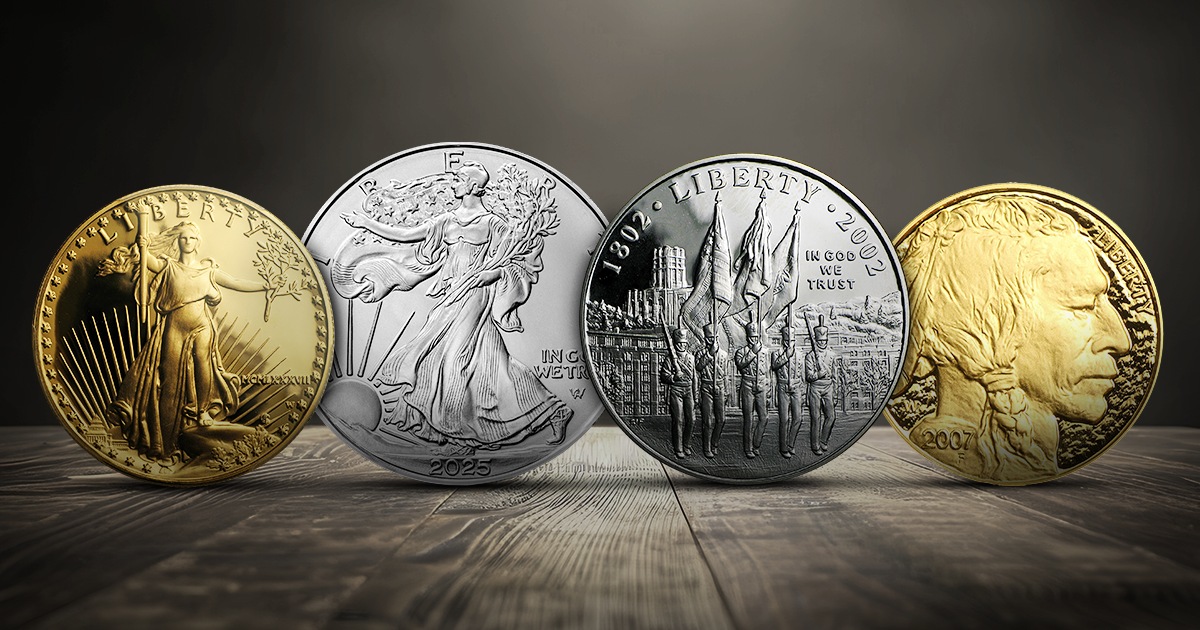
The West Point Mint is one of the most secure and specialized facilities in the United States Mint system. Unlike Philadelphia or Denver, which are widely associated with circulating coinage, West Point built its reputation around bullion storage, precious metals, commemoratives, and collector-focused coins. Its story begins not as a mint, but as a vault.
Located near the United States Military Academy in New York, the facility was originally known as the West Point Bullion Depository. Over time, it became a major storage site for precious metals and eventually evolved into one of the most important production centers for modern U.S. bullion and numismatic coinage.
From Bullion Depository to Mint
The West Point facility was built in 1937 as a bullion depository. Its original purpose was storage, not coin production. Because of the amount of precious metal it held, it earned a reputation as one of the nation’s most secure bullion sites. At one point, it was especially associated with silver storage, which helped give it the nickname “the Fort Knox of Silver.”
For decades, West Point’s role was largely behind the scenes. It safeguarded bullion and supported the federal government’s precious metals operations. But by the 1970s, the facility began taking on production work as well.
In 1973, West Point began producing Lincoln cents to help relieve pressure on other minting facilities. These coins did not carry a “W” mint mark, which means they are generally indistinguishable from Philadelphia cents of the same era. West Point also helped produce Washington quarters during the Bicentennial coinage period. Again, the facility was doing important work without yet having the full public identity collectors now associate with it.
The Road to Official Mint Status
West Point’s role continued expanding in the late 20th century. In 1980, the facility began producing gold medals. In 1983, the “W” mint mark appeared on a legal tender U.S. gold coin for the first time: the $10 gold commemorative connected to the 1984 Los Angeles Olympic Games. That moment helped introduce West Point’s identity to collectors in a more visible way.
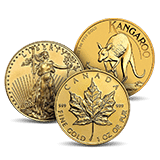
The facility became especially important in 1986 with the launch of the American Eagle bullion coin program. West Point played a central role in producing American Gold Eagles, helping establish the United States as a major participant in the modern bullion coin market.
On March 31, 1988, West Point officially became a branch of the United States Mint. That change recognized what had already become true in practice: West Point was no longer merely a depository. It had become a major coinage facility.
Coins Produced at West Point
Bullion Issues
| Type | Issue | Years Minted |
| American Gold Eagle | Various denominations | 1986 – Present |
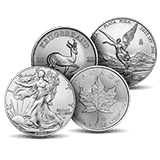
| American Silver Eagle | One-ounce silver | 1986 – Present |
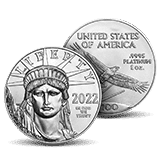
| American Platinum Eagle | Various denominations | 1997 – Present |
| American Buffalo Gold | One ounce gold | 2006 – Present |
| American Eagle Palladium | .9995 palladium | 2017 – Present |
Commemorative Coins
West Point has contributed to numerous silver and gold commemorative coins honoring American history and culture.
| Issue | Year |
| Olympic Torch Bearers $10 Gold Coin | 1984 |
| Statue of Liberty $5 Gold Coin | 1986 |
| U.S. Constitution $5 Gold Coin | 1987 |
| Mount Rushmore $5 Gold Coin | 1991 |
| World War II 50th Anniversary Proof Silver Dollar | 1993 |
| Women in Military Service Memorial Silver Dollar | 1994 |
| West Point Military Academy Bicentennial Silver Dollar | 2002 |
Special Edition and Other Issues
| Issue | Variety | Year |
| Roosevelt Dime | Issued in Mint Sets (1.5 million mintage) | 1996 |
| Sacagawea Dollar | Part of the Native American set (90,000 mintage) | 2015 |
| Lincoln Cents | Proof, Reverse Proof, and Uncirculated | 2019 |
| Washington Quarters | Part of the America the Beautiful Quarters Series. (2 million of each design were issued) | 2019 |
| Jefferson Nickels | Proof and Reverse Proof | 2020 |
Other Notable West Point Coins
| Issue | Year |
| Lowell National Park Quarter | 2019 |
| American Memorial Park Quarter | 2019 |
| Frank Church River of No Return Quarter | 2019 |
| Weir Farm National Park Quarter | 2020 |
| Marsh-Billings-Rockefeller National Park Quarter | 2020 |
| Salt River Bay National Park Quarter | 2020 |
A Mint Known for Bullion
West Point is now most closely associated with precious metals coinage. It produces American Eagle proof and uncirculated coins in gold, silver, platinum, and palladium, along with American Buffalo gold coins and many commemorative issues authorized by Congress.
This role fits the facility’s history. West Point began as a place built to secure bullion. Its modern identity is still tied to gold, silver, platinum, and palladium. While other mints are better known for circulating coinage, West Point is known for coins that collectors and precious metals buyers actively seek out.
The “W” mint mark carries a different kind of appeal than many other mint marks. It often signals a collector issue, a bullion-related release, or a special modern coin. For many collectors, the mark suggests limited distribution, careful production, and a connection to one of the most secure facilities in the Mint system.
West Point and Modern Collecting
West Point has also become important because of special issues that bring attention to modern coin collecting. Some “W” mint mark coins have appeared in collector sets, while others have entered circulation in limited quantities to encourage public interest.
The 2019 and 2020 “W” quarters are a good example. These coins were released into circulation in limited numbers as part of the America the Beautiful Quarters Program. The 2020 pieces also included a special privy mark honoring the 75th anniversary of the end of World War II. For many collectors, finding a “W” quarter in change became a modern treasure-hunt moment.
West Point has also produced special “W” Lincoln cents and Jefferson nickels for annual Mint sets. These issues gave collectors unexpected versions of familiar denominations, strengthening West Point’s reputation as a source of modern numismatic surprises.
Why the West Point Mint Matters
The West Point Mint matters because it connects two important sides of American coinage: security and collectability. It stores precious metals and produces coins made from precious metals. It supports bullion programs and creates special issues that appeal to collectors. It is both a vault and a manufacturing facility.
Its history is also a reminder that not every mint begins as a mint. West Point grew into its role gradually. It started as a depository, then quietly helped produce circulating coins, then struck medals and commemoratives, and finally became an official branch mint. That evolution makes it different from older facilities created primarily to serve regional commerce or local gold rushes.
Today, West Point is central to the Mint’s modern identity. It is not open to the public, and much of its appeal comes from that sense of security and specialization. Collectors may never tour the facility, but they know its work through the “W” mint mark and through the bullion and commemorative coins it produces.