


Mercury Dime Values
How Much Mercury Dimes are Worth: Mercury Dime Values & Coin Price Chart
Year | Mint | Variety | Designation | VG-8 | F-12 | VF-20 | EF-40 | AU-50 | U-60 | MS-63 | MS-64 | MS-65 | MS-66 | MS-67 |
|---|---|---|---|---|---|---|---|---|---|---|---|---|---|---|
1800 | P | Plain 4- Stemless Wreath | Red-brown | 200 | 300 | 400 | 500 | 600 | 700 | 800 | 900 | 1000 | 1200 | 1100 |
| Year | Mint | Variety | Designation | VG-8 | F-12 | VF-20 | EF-40 | AU-50 | MS-60 | MS-63 | MS-64 | MS-65 | MS-66 |
|---|---|---|---|---|---|---|---|---|---|---|---|---|---|
| 1916 | (None) Phil | Mercury | -- | -- | -- | -- | -- | -- | -- | -- | -- | -- | $400 |
| 1916 | D | -- | -- | $2,563 | $4,020 | $5,525 | $8,375 | $12,050 | $15,475 | $22,500 | $27,500 | $33,500 | $55,000 |
| 1916 | S | Mercury | -- | -- | -- | -- | -- | -- | -- | -- | -- | $338 | $441 |
| 1917 | (None) Phil | -- | -- | $7.60 | $7.80 | $8.70 | $12.50 | $16.70 | $49 | $78 | $112 | $208 | $452 |
| 1917 | D | -- | -- | $13.90 | $18.30 | $31 | $77 | $111 | $181 | $310 | $454 | $930 | $1,700 |
| 1917 | S | -- | -- | -- | -- | -- | -- | -- | -- | $261 | $336 | $436 | $1,093 |
| 1918 | (None) Phil | -- | -- | $9.30 | $13.40 | $19 | $42 | $53 | $100 | $191 | $246 | $521 | $1,513 |
| 1918 | D | -- | -- | -- | -- | -- | -- | -- | -- | $376 | $496 | $983 | $2,060 |
| 1918 | S | -- | -- | -- | -- | -- | -- | -- | -- | $390 | $602 | $1,047 | $1,355 |
| 1919 | (None) Phil | -- | -- | $7.60 | $8.90 | $10.40 | $16.90 | $34 | $76 | $199 | $260 | $492 | $993 |
| 1919 | D | -- | -- | -- | -- | -- | -- | -- | $403 | $774 | $1,023 | $1,548 | $4,230 |
| 1919 | S | -- | -- | -- | -- | -- | -- | -- | $452 | $1,070 | $1,595 | $2,100 | $3,125 |
| 1920 | (None) Phil | -- | -- | -- | -- | -- | -- | -- | -- | -- | -- | $310 | $548 |
| 1920 | D | -- | -- | -- | -- | -- | -- | -- | -- | $560 | $668 | $812 | $1,798 |
| 1920 | S | -- | -- | $9.90 | $14.80 | $20.20 | $46 | $105 | $350 | $642 | $959 | $1,750 | $2,945 |
| 1921 | (None) Phil | -- | -- | $115 | $162 | $281 | $592 | $1,000 | $1,878 | $2,813 | $3,413 | $5,075 | $5,500 |
| 1921 | D | -- | -- | $158 | $245 | $391 | $759 | $1,353 | $2,150 | $3,338 | $3,913 | $4,563 | $5,613 |
| 1923 | (None) Phil | -- | -- | -- | -- | -- | -- | -- | -- | -- | -- | -- | $293 |
| 1923 | S | -- | -- | $11.40 | $17.10 | $29.90 | $103 | $156 | $391 | $633 | $973 | $1,395 | $2,488 |
| 1924 | (None) Phil | -- | -- | $8.10 | $9.40 | $10.90 | $19.90 | $36 | $77 | $127 | $187 | $255 | $579 |
| 1924 | D | -- | -- | -- | -- | -- | -- | -- | $333 | $527 | $749 | $1,533 | $2,545 |
| 1924 | S | -- | -- | -- | -- | -- | -- | -- | $440 | $629 | $1,025 | $2,148 | $3,898 |
| 1925 | (None) Phil | -- | -- | -- | -- | -- | -- | -- | -- | -- | -- | $360 | $792 |
| 1925 | D | -- | -- | -- | -- | -- | -- | -- | $577 | $920 | $1,220 | $1,963 | $3,845 |
| 1925 | S | -- | -- | -- | -- | -- | -- | -- | $448 | $802 | $1,143 | $1,548 | $2,988 |
| 1926 | (None) Phil | -- | -- | -- | -- | -- | -- | -- | -- | -- | -- | $273 | $538 |
| 1926 | D | -- | -- | -- | -- | -- | -- | -- | -- | $363 | $502 | $708 | $1,853 |
| 1926 | S | -- | -- | -- | -- | -- | $346 | $519 | $2,090 | $3,225 | $3,938 | $4,988 | $6,525 |
| 1927 | (None) Phil | -- | -- | -- | -- | -- | -- | -- | -- | -- | -- | -- | $465 |
| 1927 | D | -- | -- | $11.60 | $17.40 | $37 | $119 | $163 | $405 | $927 | $1,615 | $1,985 | $2,480 |
| 1927 | S | -- | -- | -- | -- | -- | -- | -- | $487 | $1,018 | $1,333 | $1,778 | $3,650 |
| 1928 | (None) Phil | -- | -- | -- | -- | -- | -- | -- | -- | -- | -- | -- | $362 |
| 1928 | D | -- | -- | -- | -- | -- | -- | -- | $267 | $525 | $658 | $1,105 | $2,100 |
| 1928 | S | -- | -- | -- | -- | -- | -- | -- | -- | $375 | $440 | $578 | $802 |
| 1929 | (None) Phil | -- | -- | -- | -- | -- | -- | -- | -- | -- | -- | -- | $287 |
| 1929 | D | -- | -- | $7.60 | $7.80 | $14.30 | $15.30 | $16.10 | $34 | $54 | $92 | $147 | $255 |
| 1929 | S | -- | -- | -- | -- | -- | -- | -- | -- | -- | -- | $267 | $389 |
| 1930 | (None) Phil | -- | -- | -- | -- | -- | -- | -- | -- | -- | -- | -- | $270 |
| 1930 | S | -- | -- | -- | -- | -- | -- | -- | -- | -- | $283 | $419 | $590 |
| 1931 | (None) Phil | -- | -- | -- | -- | -- | -- | -- | -- | -- | -- | -- | $375 |
| 1931 | D | -- | -- | -- | -- | -- | -- | -- | -- | -- | $267 | $424 | $617 |
| 1931 | S | -- | -- | -- | -- | -- | -- | -- | -- | -- | $271 | $423 | $670 |
| 1934 | (None) Phil | -- | -- | $7.30 | $7.70 | $8 | $12.90 | $28.70 | $66 | $45 | $54 | $66 | $102 |
| 1934 | D | -- | -- | $7.50 | $8.10 | $9.90 | $19.10 | $32 | $68 | $84 | $102 | $133 | $222 |
| 1935 | (None) Phil | -- | -- | $7.30 | $7.70 | $8 | $14.40 | $18.90 | $34 | $48 | $56 | $64 | $101 |
| 1935 | D | -- | -- | $7.60 | $7.60 | $9 | $12.60 | $27.40 | $47 | $68 | $83 | $110 | $199 |
| 1935 | S | -- | -- | -- | -- | -- | -- | -- | -- | -- | -- | -- | -- |
| 1936 | (None) Phil | -- | -- | -- | -- | -- | -- | -- | -- | -- | -- | -- | -- |
| 1936 | D | -- | -- | -- | -- | -- | -- | -- | -- | -- | -- | -- | -- |
| 1936 | S | -- | -- | $7.60 | $7.60 | $8 | $14.50 | $23 | $32 | $41 | $47 | $56 | $100 |
| 1937 | (None) Phil | -- | -- | -- | -- | -- | -- | -- | -- | -- | -- | -- | -- |
| 1937 | D | -- | -- | -- | -- | -- | -- | -- | -- | -- | -- | -- | -- |
| 1937 | S | -- | -- | -- | -- | -- | -- | -- | -- | -- | -- | -- | -- |
| 1938 | (None) Phil | -- | -- | -- | -- | -- | -- | -- | -- | -- | -- | -- | -- |
| 1938 | D | -- | -- | $7.30 | $7.70 | $8 | $10 | $13.20 | $24.60 | $34 | $41 | $56 | $89 |
| 1938 | S | -- | -- | -- | -- | -- | -- | -- | -- | -- | -- | -- | -- |
| 1939 | (None) Phil | -- | -- | -- | -- | -- | -- | -- | $25 | $53 | $90 | $192 | $297 |
| 1939 | D | -- | -- | -- | -- | -- | -- | -- | -- | $42 | $60 | $93 | $117 |
| 1939 | S | -- | -- | -- | -- | -- | -- | -- | $75 | $173 | $360 | $565 | $1,408 |
| 1940 | (None) Phil | -- | -- | -- | -- | -- | -- | -- | $19 | $31 | $41 | $75 | $96 |
| 1940 | D | -- | -- | -- | -- | -- | -- | -- | -- | $31 | $41 | $62 | $103 |
| 1940 | S | -- | -- | -- | -- | -- | -- | -- | -- | -- | -- | -- | -- |
| 1941 | (None) Phil | -- | -- | -- | -- | -- | -- | -- | -- | -- | -- | -- | -- |
| 1941 | D | -- | -- | -- | -- | -- | -- | -- | -- | -- | -- | -- | -- |
| 1941 | S | -- | -- | -- | -- | -- | -- | -- | -- | -- | -- | -- | -- |
| 1941 | S | -- | -- | -- | -- | -- | -- | -- | $20 | $33 | $50 | $70 | $109 |
| 1942 | (None) Phil | -- | -- | -- | -- | -- | -- | -- | $19 | $31 | $41 | $58 | $89 |
| 1942/1 | (None) Phil | -- | -- | -- | -- | -- | $1,000 | $1,700 | $5,275 | $22,500 | $45,000 | $87,500 | $130,000 |
| 1942 | D | -- | -- | -- | -- | -- | -- | -- | $19 | $31 | $44 | $65 | $89 |
| 1942/1 | D | -- | -- | -- | -- | -- | -- | $2,098 | $5,088 | $9,275 | $10,875 | $23,550 | $50,000 |
| 1942 | S | -- | -- | -- | -- | -- | -- | -- | $19 | $40 | $66 | $134 | $199 |
| 1943 | (None) Phil | -- | -- | -- | -- | -- | -- | -- | -- | $31 | $41 | $60 | $97 |
| 1943 | D | -- | -- | -- | -- | -- | -- | -- | $19 | $32 | $42 | $62 | $84 |
| 1943 | S | -- | -- | -- | -- | -- | -- | -- | -- | $36 | $45 | $89 | $120 |
| 1944 | (None) Phil | -- | -- | -- | -- | -- | -- | -- | $19 | $36 | $48 | $92 | $199 |
| 1944 | D | -- | -- | -- | -- | -- | -- | -- | $19 | $32 | $44 | $65 | $84 |
| 1944 | S | -- | -- | -- | -- | -- | -- | -- | -- | $33 | $47 | $73 | $107 |
| 1945 | (None) Phil | -- | -- | -- | -- | -- | -- | -- | $5,500 | $9,425 | $12,775 | $16,100 | $27,500 |
| 1945 | D | -- | -- | -- | -- | -- | -- | -- | $19 | $32 | $44 | $62 | $84 |
| 1945 | S | -- | -- | -- | -- | -- | -- | -- | -- | $44 | $58 | $126 | $280 |
| 1945 | S | Micro S | -- | -- | -- | -- | -- | -- | -- | -- | $358 | $532 | $1,750 |
History of the Mercury Dime
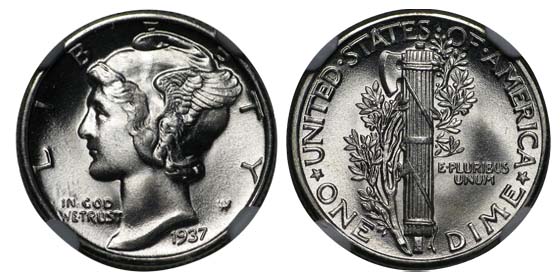
The Mercury Dime, also known as the Winged Liberty Head dime, was minted from 1916 to 1945. It was designed by Adolph A. Weinman, a noted sculptor who also designed the Walking Liberty half dollar. Production ended in 1945 when the Mercury design gave way to the Roosevelt Dime in 1946.
The coin’s obverse features a depiction of Liberty wearing a winged Phrygian cap, symbolizing freedom of thought. The design was initially mistaken for the Roman god Mercury, which is how the coin got its popular name. The reverse shows a fasces (a bundle of rods with an axe) symbolizing strength and unity, intertwined with an olive branch symbolizing peace. Although praised for its artistry, early pieces had rims that sat too high. The United States Mint lowered the rim to ensure the coin worked smoothly in vending machines and pay phones.
Rarest Coins in the Series
- 1916-D First Year Issue: The rarest and most valuable Mercury Dime, struck at the Denver Mint with a low mintage of approximately 264,000.
- 1921: Known for its low mintage and high demand among collectors.
- 1942/1 Overdate: Shows a visible 1 under the 2 in the date, a popular error.
View the list of key dates and varieties here.
Types of Collections
- Date and Mint Mark Set: Collectors seek Mercury Dimes from all mint marks (Philadelphia, Denver, San Francisco) and every date from 1916-1945.
- Key Date Collection: Focus on rare and valuable dates.
- Full Bands Variety Collection: Coins exhibiting sharply defined horizontal bands on the fasces, known as “Full Bands,” are a premium collectible type.
- Condition and Graded Collection: Collectors acquire coins graded by PCGS or NGC, ranging from circulated to high Mint State levels.
Beginner vs. Advanced Collecting
Beginner Collecting
Mercury dimes are widely collected and include many common dates (especially from the Philadelphia Mint) that are plentiful and modestly priced in circulated grades. This makes it practical for new collectors to build a basic set of common dates by buying from coin shops, online auctions, and coin shows. Focus on coins with clear details, any remaining natural luster, and minimal damage. Avoid PVC-containing plastics that can harm silver surfaces. Simple, archival-quality, non-PVC holders kept in a stable, temperature-controlled, low-humidity environment are suitable for long-term storage.
Advanced Collecting
Advanced collectors can focus on key dates, notable mintmarks, and high-grade examples with an attractive appearance. Coins showing well-defined bands on the reverse fasces (designated Full Bands, or FB) often command premiums compared with similar non-FB pieces, depending on date and grade. Completing a high-grade Mercury dime set typically requires patience, careful budgeting, and close attention to authenticity and third-party grading. Certified holders from reputable services, paired with temperature-controlled, low-humidity storage and careful handling, help preserve condition and support the value of these more challenging and high-value coins.
Investment Potential
Collectors appreciate Mercury Dimes for their historical significance, iconic design, and 90 % silver content, so the coins serve both numismatic and bullion purposes. Key dates have shown steady price growth over time. Mercury Dimes graded MS-65 or higher, especially those carrying a Full Bands designation, often sell at significant premiums. Because the coin combines renowned design with intrinsic silver value, it appeals to both numismatic and bullion-focused buyers.