


Native American Dollar Values
How Much Native American Dollar are Worth: Native American Dollar Values & Coin Price Chart
Year | Mint | Variety | Designation | VG-8 | F-12 | VF-20 | EF-40 | AU-50 | U-60 | MS-63 | MS-64 | MS-65 | MS-66 | MS-67 |
|---|---|---|---|---|---|---|---|---|---|---|---|---|---|---|
1800 | P | Plain 4- Stemless Wreath | Red-brown | 200 | 300 | 400 | 500 | 600 | 700 | 800 | 900 | 1000 | 1200 | 1100 |
History of the Native American Dollar
The Native American Dollar, introduced in 2009, continues the legacy of the Sacagawea Dollar while adding a fresh cultural and historical dimension. Designed to highlight the invaluable contributions of Native American communities to the development of the United States as mandated under the Native American $1 Coin Act of 2007, this modern series serves as both currency and commemoration.
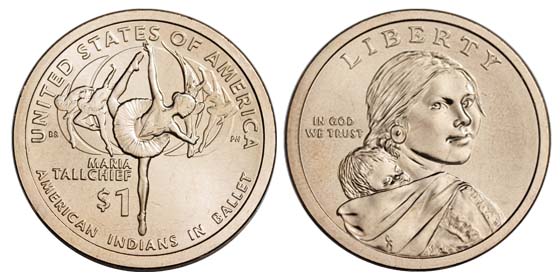
The coin’s obverse remains unchanged from the original Sacagawea Dollar, showcasing Glenna Goodacre’s portrait of Sacagawea, the Lemhi Shoshone woman who guided the Lewis and Clark expedition, with her infant son, Jean Baptiste, on her back. The reverse, however, rotates annually and features designs that celebrate Native American innovation, leadership, and cultural contributions.
Notable designs include:
- 2010 – The Great Tree of Peace: Honoring the Iroquois Confederacy’s role in shaping democratic principles that influenced the U.S. Constitution.
- 2017 – Sequoyah’s Syllabary: Recognizing the Cherokee scholar who created a written language for his people.
- 2020 – Elizabeth Peratrovich: Celebrating her advocacy for Alaska Native civil rights.
- 2021 – Indian Citizenship Act: Commemorating the 1924 law granting U.S. citizenship to Native Americans.
Minted with a manganese-brass clad composition, the coin has a distinctive golden hue. Although the coins are legal tender and could have circulated after 2011, the U.S. Mint released them mainly in collector products instead of general circulation.
This evolving series remains one of the most culturally significant programs in modern U.S. coinage, with collectors valuing its artistry, educational themes, and commemoration of Indigenous heritage.
Rarest Coins in the Series
Although no single Native American Dollar is exceptionally rare in terms of mintage, certain issues and special finishes command higher premiums due to their limited production or thematic appeal. The 2015 Mohawk Ironworkers Dollar, for instance, stands out for its distinctive design honoring Native American ironworkers who helped build New York City’s iconic skyline.
Other sought-after releases include:
- 2009 “Three Sisters” Agriculture Dollar, the inaugural coin of the series, which celebrates Indigenous agricultural traditions.
- 2011 Wampanoag Treaty Dollar, depicting the first peace treaty between Native Americans and Pilgrims.
- 2019 American Indians in the Space Program, honoring Indigenous astronauts and engineers who contributed to NASA missions.
View the complete list of key date varieties here.
Error varieties, such as missing edge lettering or double strikes, can also enhance a coin’s rarity and influence overall Native American Dollar value.
Types of Collections
Collectors approach the Native American Dollar series in a variety of ways:
- Complete Series Collections: Featuring one coin from each year in a variety of conditions.
- Theme-Based Collections: Focusing on specific topics such as innovation, governance, or cultural heritage.
- Proof and Uncirculated Sets: Sought after for their sharp details and mirror-like finishes.
- Error and Variety Collections: Built around coins with minting anomalies or experimental strikes, which are valued by advanced numismatists.
Because new designs are released annually, this series remains engaging and dynamic, offering collectors something fresh to anticipate every year.
Beginner vs. Advanced Collecting
Beginner Collecting
For beginners, the Native American Dollar is one of the most accessible modern U.S. coin series. The coins are widely available through the U.S. Mint, affordable, and often sold in rolls or annual sets. Collectors can start by purchasing brilliant uncirculated (BU) examples directly from the Mint or secondary markets.
Advanced Collecting
Advanced collectors, on the other hand, pursue proof editions, special mint set releases, and error coins. Some also focus on complete certified sets, graded by services such as PCGS or NGC, ensuring authenticity and preservation. Coins with flawless finishes or unique errors, like missing edge inscriptions, are particularly desirable, as they represent the upper tier of Native American Dollar rarity and interest within the collecting community.
Investment Potential
While the Native American Dollar does not contain precious metals like gold or silver, its investment potential lies in its cultural and historical significance. The series’ annual design changes, low mintages compared to traditional circulating coins, and connection to Indigenous heritage give it lasting collector appeal.
Collectors and investors alike recognize that modern commemorative coins with meaningful narratives often appreciate over time, especially those released in limited proof or enhanced uncirculated editions. The Native American Dollar value has shown steady collector interest as awareness of Indigenous history and contributions continues to expand.
For investors seeking coins that combine artistic beauty with social significance, this series offers a meaningful addition to modern collections while honoring Native American legacies.