
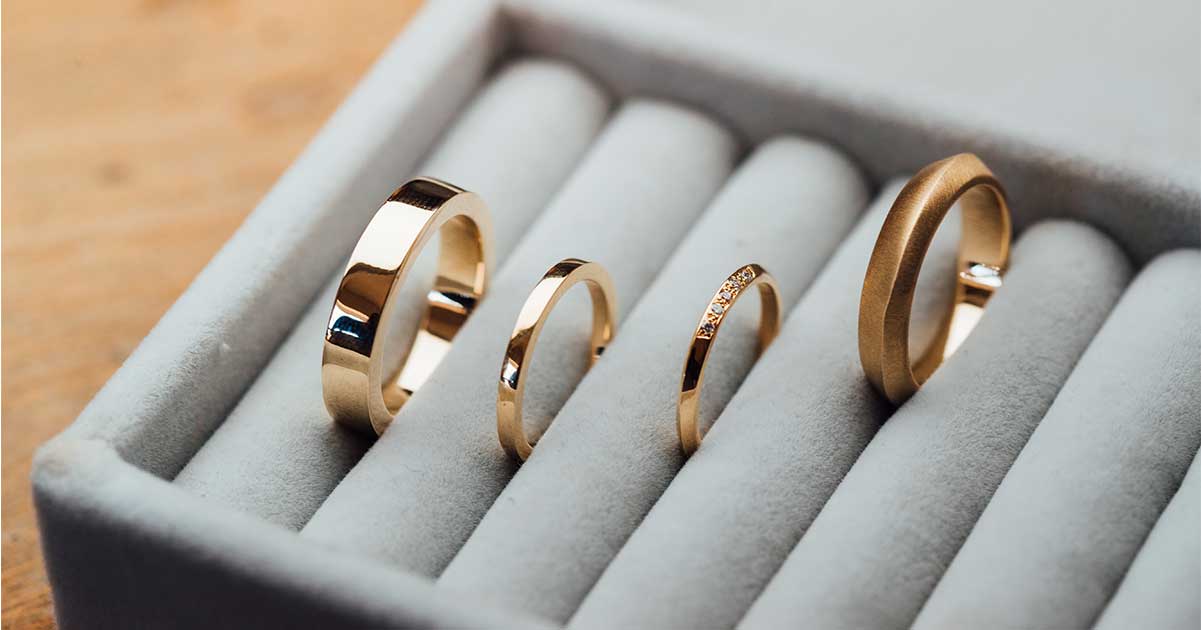
Selling a wedding ring is an emotional choice, but buyers focus on metal, stones, and resale demand, not sentimental value. Once you understand those factors, you can choose a buyer and recognize when an offer is fair.
What Determines a Wedding Ring’s Value
Most buyers focus on three elements:
- Metal: what it is, how pure it is, and how much it weighs.
- Stones: usually diamonds, judged on quality and size.
- Design and brand: whether the finished ring is easy to resell.
For metal, a gold wedding ring is priced mainly on purity and weight. Jewelers and gold buyers look for karat stamps such as 10k, 14k, or 18k on the interior of the ring, weigh the ring, then convert that to an amount of pure gold using the current gold price per gram. Rings made from platinum or other precious metals are valued the same way, just against a different market price.
Diamonds are usually evaluated using the four Cs: cut, color, clarity, and carat weight. Lab reports can support stronger offers, but many everyday rings are graded in-house rather than through a formal laboratory. Diamonds in used jewelry sell for a fraction of retail; design and branding premiums rarely transfer to the secondhand market.
Why a Professional Assessment Helps
Before you sell a wedding ring, it is useful to get professional assessments. A local jeweler or appraiser can confirm metal type and karat, estimate diamond quality, and indicate whether the ring is more valuable as a finished piece or mainly for its gold content and stones.
Written appraisals, grading reports, or even a brief written estimate can help when you approach online marketplaces or remote jewelry buyers. Because different buyers may emphasize different parts of the ring (metal, diamonds, or brand), having a neutral reference point makes it easier to understand why their offers differ.
Selling Through Local Jewelers
Local jewelers are a common first stop when people decide to sell wedding rings. Many jewelry stores buy and sell pre-owned diamond and jewelry items, including wedding bands and engagement rings.
Advantages include face-to-face contact, a chance to ask questions about construction and quality, and same-day payment if you accept an offer. The drawback is that local jewelers need enough margin to clean, resize, and resell the ring. This leads to offers often aligning closer to wholesale prices rather than full resale value, especially for common styles or smaller, mid-grade stones.
Selling To a Pawn Shop
Pawn shops almost always buy wedding rings. They are set up for quick transactions: you bring in a ring, they test the metal and stones, and you leave with cash or a loan.
Pawn shops pay the least among major options. Their focus is speed and risk management, not maximizing the seller’s profit. Offers are usually well below both estimated metal and diamond value to protect against price swings. Pawn shops make sense if you need cash fast, but not if your goal is to get the most money for the ring.
Using Online Marketplaces
General online marketplaces let you list a ring directly to individual buyers. If someone loves your specific design and size, you may achieve a higher price than you would from a wholesaler, because you are selling a finished ring rather than components.
The trade-off is that you must create clear, accurate listings and manage safety yourself. When selling wedding rings online, be realistic about price and be prepared to negotiate.
When creating the listing, use detailed photos, honestly grade the metal and stones, use secure payment methods, and ship with both tracking and adequate insurance. Many sellers don’t appreciate the level of effort they have to go through to use these online marketplaces, even though the payoff is sometimes better.
Working with Specialized Online Jewelry Buyers
Specialized online jewelry buyers and auction-style platforms are designed specifically to handle diamond and jewelry items, including wedding rings. Typical features include insured shipping to a central facility, evaluation by professional gemologists, high-quality photography, and either a direct purchase offer or a short online auction to a network of vetted jewelry buyers.
These specialist online buyers frequently provide higher net payouts than pawn shops and, in many cases, more than walk-in offers from local jewelers, particularly for better-quality diamond rings. Because the process is standardized and documented, many sellers view it as a safer, easier way to reach a fair price without the pressure of on-the-spot negotiations. It still requires a great deal of effort and attention to detail, which puts some sellers off.
Does APMEX Buy Wedding Rings?
For some rings, especially plain gold bands or pieces with small or modest stones, the metal itself may be the primary source of value. In these situations, it can make sense to work with a buyer that specializes in precious metals and focuses on gold content rather than gemstone details.
APMEX is a large precious metal dealer that buys gold, silver, and related products through the Old Gold & Silver program. Customers start online or on the app, request a prepaid insured kit (or lock in a quote), then ship items to the central facility for authentication and weighing.
Offers are based on current market conditions and the confirmed gold content of the underlying metal. There are detailed shipping instructions describing how items are to be packaged, shipped under specific guidelines, and paid for after processing.
In practice, a wedding ring submitted for its gold value is treated like other scrap or bullion: it is evaluated for metal type, purity, and weight and then priced according to the real-time gold market rather than a fixed table. For sellers mainly interested in realizing the gold value of a ring through a structured, process-driven buyer, this approach helps keep offers closely tied to the current spot price of gold. The program does not pay for gemstones, so you may wish to remove them before sending in your ring.
Comparing Offers Before You Decide to Sell
Whichever route you choose, comparing more than one offer is critical when you sell wedding ring jewelry. While there are many ways to go about vetting offers, there are a few consistent steps:
- Know the basics: metal purity, approximate weight, and the current gold price.
- Get at least one independent assessment to understand whether the ring should be sold as jewelry or primarily for metal content.
- Collect written or clearly explained offers from at least two types of buyers (for example, a local jeweler and a specialist online buyer) so you can see how different business models value the same ring.
- Consider not only the headline price, but also any fees, commissions, and the security and timing of payment.
Due to sentimental value, selling your engagement ring or wedding band is rarely just another transaction. But once you separate the emotional element from the economics, the decisions become clearer. By understanding metal value, diamond quality, and resale demand while comparing multiple offers, you can choose the best option: local jeweler, pawn shop, online marketplace, specialized jewelry buyer, or metal-focused firm such as APMEX.