
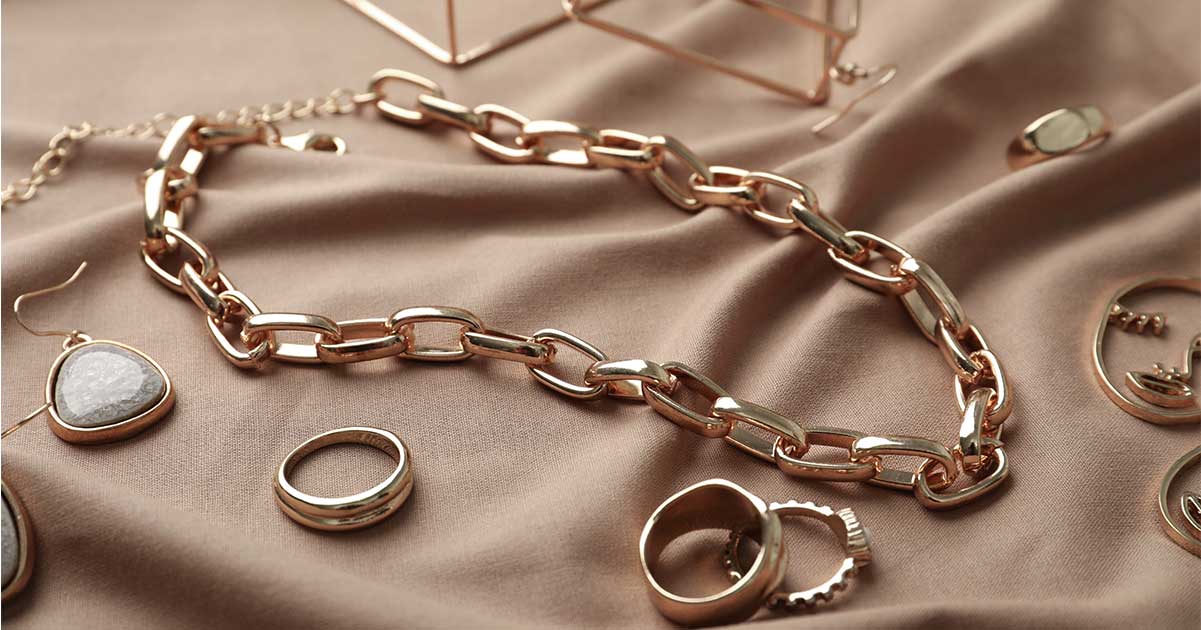
If you have a pile of old chains and you know they aren’t solid gold, you may ask yourself, “Can you sell gold-filled jewelry?” The short answer is yes, sometimes, but it’s very different from selling solid gold.
What Is Gold-Filled Jewelry?
Gold-filled jewelry is made by mechanically bonding a thick layer of gold to a base metal core (usually brass) using heat and pressure.
By U.S. standards, a piece can only be called gold-filled if the gold layer is at least 5% of the item’s total weight (often marked “1/20 14K GF,” meaning 14K gold that’s 1/20 of the total weight). Gold-filled is also very different from gold-plated, where the gold layer is typically around 0.05% of the weight or less. So, while gold-filled items may have some value, most gold-plated pieces contain so little gold that many refineries and buyers do not purchase them for their melt value, especially in small quantities.
Can You Sell Gold-Filled Jewelry for Melt Value?
Refiners and scrap buyers are interested in precious metals, not base metals. Because gold-filled pieces contain only a thin fraction of gold by weight, and that layer can be worn down, the recoverable gold content is relatively low.
Practically speaking, this means that many pawn shops, jewelers, and local cash-for-gold buyers will not accept gold-filled jewelry or pieces at all. The labor and refining costs often outweigh the small amount of gold they can recover from a handful of items.
When gold-filled jewelry is accepted for refining, buyers usually want larger bulk quantities, such as bags of watchbands, eyeglass frames, or mixed gold-filled scrap, so that the total gold recovered justifies processing. This is why specialized refiners and scrap companies advertise specifically for gold-filled scrap.
So yes, you can sell gold-filled jewelry for melt value, but usually only to specialized refiners or scrap buyers, and often only in significant volume.
Other Ways to Sell Gold-Filled Jewelry
Because the gold content per piece is modest, small amounts of gold-filled jewelry are often easier to sell as usable jewelry than as scrap. Depending on the style, condition, and brand, resale as vintage or fashion jewelry through online marketplaces or consignment shops can sometimes yield proceeds comparable to or better than scrap offers.
For damaged or broken pieces, you may need to accumulate a larger lot of gold-filled items before a gold-filled buyer or refiner will consider it worth processing. In short, gold-filled jewelry does have value, but it’s usually less about the gold weight and more about either the resale appeal or bulk scrap volume.
Can I Sell My Gold-Filled Items to APMEX?
There is a program to buy old gold and silver, including gold jewelry, silver jewelry, silverware, dental gold, and some gold and silver décor items. However, gold-filled products are not accepted. The Old Gold Program is designed for items whose precious metal content can be evaluated by karat and weight, such as solid gold jewelry, coins, bars, and certain other gold and silver pieces.

How to Decide What to Do with Your Gold-Filled Jewelry
If you’re deciding what to do with gold-filled items, there are a few things to keep in mind that can help.
- Confirm what you actually have. Look for stamps like “1/20 12K GF” or “1/20 14K GF” to distinguish gold filled from plated or “gold tone” pieces.
- Separate solid gold from gold-filled and plated items. Solid gold will generally bring the strongest offers from scrap buyers and programs like APMEX’s Old Gold Program.
- Consider resale vs. scrap. Wearable vintage or designer gold-filled pieces may be better sold as jewelry, while broken or bulk gold-filled scrap is more appropriate for specialized buyers or refiners.
So, can you sell gold-filled jewelry? Yes. However, selling it is generally more challenging than selling solid gold because the fine gold content is only a small fraction of the total weight, offers per gram typically reflect that lower content, and many buyers will only consider gold-filled in bulk quantities or through specialized refiners.