
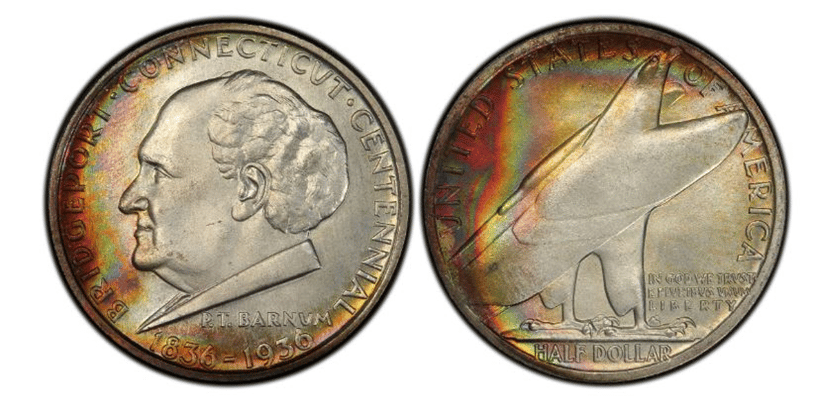
The 1936 Bridgeport, Connecticut Centennial
Bridgeport, Connecticut, was chartered as a city in 1836, and the Centennial of the Incorporation of the City of Bridgeport (CT) was scheduled for 1936. The citizens of Bridgeport wanted a commemorative coin to help defray the costs of the Centennial Celebration. In March of 1936, a bill authorizing the 1936 Bridgeport Connecticut Centennial Half Dollar was put before Congress. The original bill authorized only 10,000 coins to be struck, but it was amended to a minimum of 25,000 coins. The bill, which was amended several times, passed both Houses and was signed into law by President Franklin D. Roosevelt.
Design Details
The Bridgeport Centennial Committee hired Connecticut sculptor and artist, Henry Kreis, to design the 1936 Bridgeport Connecticut Centennial Half Dollar. Kreis had experience designing coins, having designed the 1935 Connecticut Tercentenary Half Dollar the previous year.
Kreis was instructed to put P.T. Barnum, one of Bridgeport’s most famous citizens and a former mayor of the city, on the obverse of the coin and an eagle motif on the reverse. The obverse of the coin had Barnum, in profile, facing left. Beneath his portrait was his name “P. T. Barnum” and around the entire obverse periphery were “BRIDGEPORT * CONNECTICUT * CENTENNIAL * 1836 – 1936.”
Like the 1935 Connecticut Tercentenary Half Dollar, the reverse features an Art Deco-style eagle. This eagle faced high criticism from the public. The eagle faces the right, and in small print near its legs are “IN GOD WE TRUST”, “E PLURIBUS UNUM”, and “LIBERTY”. Around the periphery is “UNITED STATES OF AMERICA” and the denomination “HALF DOLLAR”.
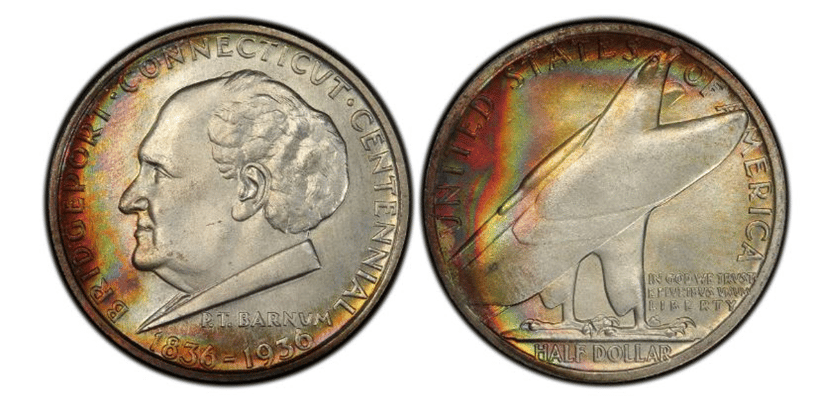
The eagle design earned praise from artists and scholars but puzzled some viewers, who debated whether the stylized figure resembled an eagle, a shark, or even an airplane. Because Art Deco was the prevailing modern style of the era, reactions to the piece were mixed.
Distribution Details
In September 1936, the Philadelphia Mint struck 25,015 1936 Bridgeport Connecticut Centennial Half Dollars, with 15 of those coins reserved for the annual assay. They were offered to the public at $2 each through local banks in Bridgeport. Orders from across the country were handled by the First National Bank of Bridgeport. The coins were sold in 1- and 3-coin blue boxes, even though they all came from a single mint.
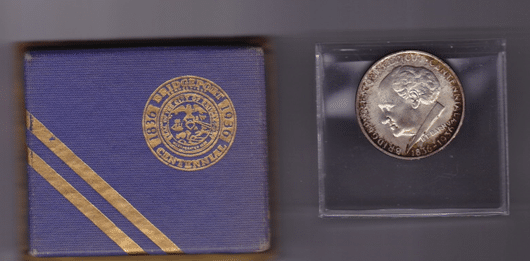
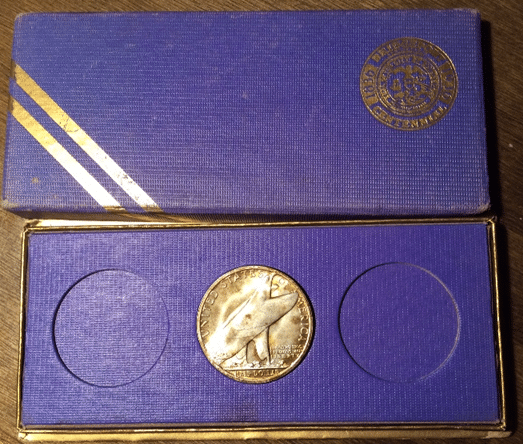
Coins stored long-term in original holders often develop yellow-brown toning due to the materials used in the packaging. If the coins are brilliant in these holders, you know they have not been in them for a long time.
This coin was available in significant quantities throughout the 1950s. One dealer had amassed more than 1,000 specimens. Other dealers had accumulated these coins by the roll. Today, the market availability varies over time and by grade level for each 1936 Bridgeport Connecticut Centennial Half Dollar. Add this coin to your collection and discover other U.S. classic silver commemorative coins.