
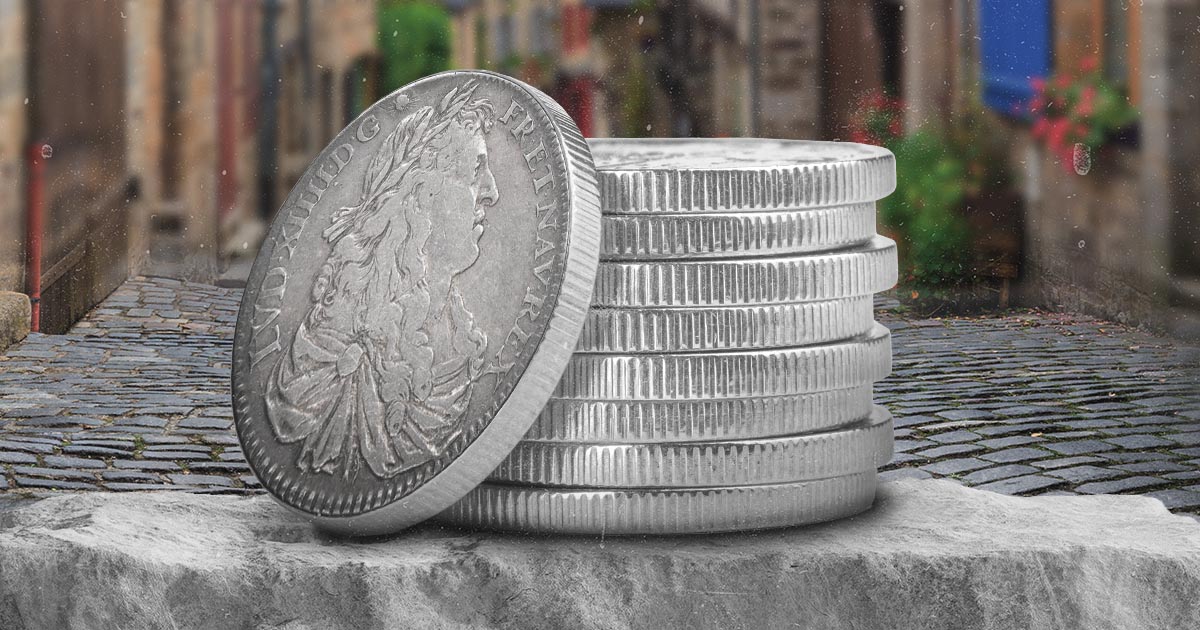
French New World Coinage of 1670: 5 Sols, 15 Sols, and the Copper Double
In the early years of French settlement and trade in North America and the Caribbean, colonists and merchants routinely faced shortages of reliable small change. To help stabilize commerce in French overseas territories, King Louis XIV authorized a special coinage in 1670 for use in France’s American possessions, tied to the commercial needs of the Compagnie des Indes Occidentales. Numismatists call these pieces French New World coinage. They are linked to New France and other colonial regions, although the coins were struck at the Paris Mint.
A 1670 Royal Edict and Paris Mint Production
An edict dated February 19, 1670 ordered the creation of silver coins in denominations of 5 sols and 15 sols, along with authorization for a copper piece valued at 2 deniers, commonly called a double. The Paris Mint, identified by its “A” mintmark on these coins, undertook the production. Published mint records list about 200,000 five-sol pieces and 40,000 fifteen-sol pieces. More detailed studies reach similar totals.
The coinage was intended for regular circulation, not as an experiment. The intent was to create a practical colonial money supply in denominations that could facilitate everyday transactions. The 15 sols represented the larger silver unit, while the 5 sols provided a smaller silver option suitable for more routine trade. Contemporary and later numismatic commentary frequently links these issues to colonial circulation needs in places such as New France (including areas around the St. Lawrence and Newfoundland) and, more broadly, to French territories in the Americas.
The copper 2-denier double was authorized but never released for normal circulation. The copper 2 deniers double appears to have been authorized but never became a normal circulating issue. It is generally treated as a pattern or non-issued type, and only one specimen is confidently traced today, although older references reported an additional example that has not been confirmed.
Design Details and What Collectors Encounter
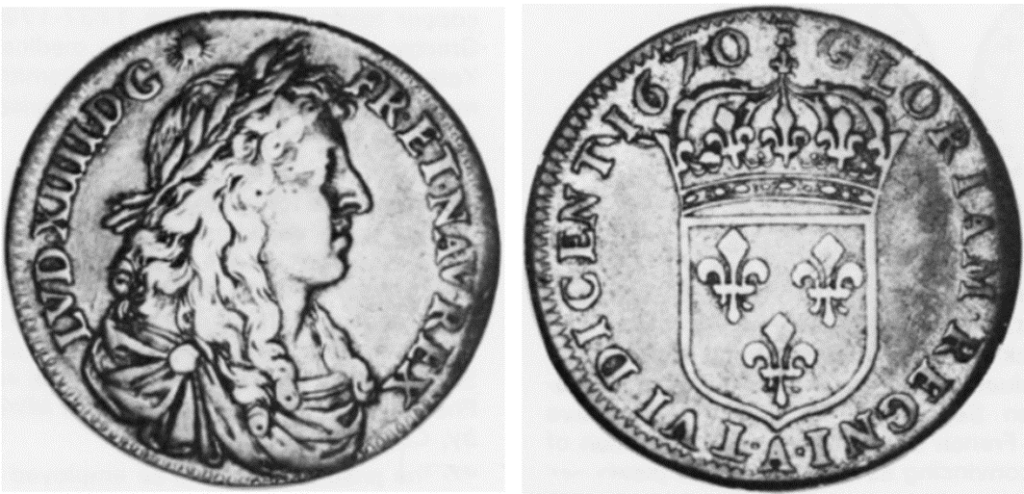
The silver 5 sols and 15 sols share a consistent royal design language. On the obverse is a bust of King Louis XIV facing right, accompanied by a Latin legend identifying him as king “by the grace of God,” commonly rendered in abbreviated form on the coinage as “LVD XIIII D G FR ET NAV REX”.
The reverse centers on a crowned shield bearing three fleurs-de-lis, the classic emblem of the French monarchy. Around it appears the legend “GLORIAM REGNI TVI DICENT” along with the date 1670. Together, the portrait and arms communicate that this was official royal coinage intended to carry authority and confidence in colonial markets.
The copper double differs both in denomination and in surviving status. The unique 1670-A copper piece is commonly described with legends that explicitly reference “America” and “French America,” underscoring its colonial purpose. The copper double is a single known specimen. It is documented in certification records and auction catalogs but is not available to collectors.
From a practical collecting standpoint, the 5 sols is typically the most approachable of the 1670 trio. Because many five-sol pieces survive, collectors can locate examples through regular sales rather than high-profile auctions. The fifteen-sol piece is scarcer and usually costs more. It appears most often in large public auctions. The copper double, by contrast, is effectively unavailable because it is unique, making it a reference-point coin rather than a realistic acquisition target for most collectors.