
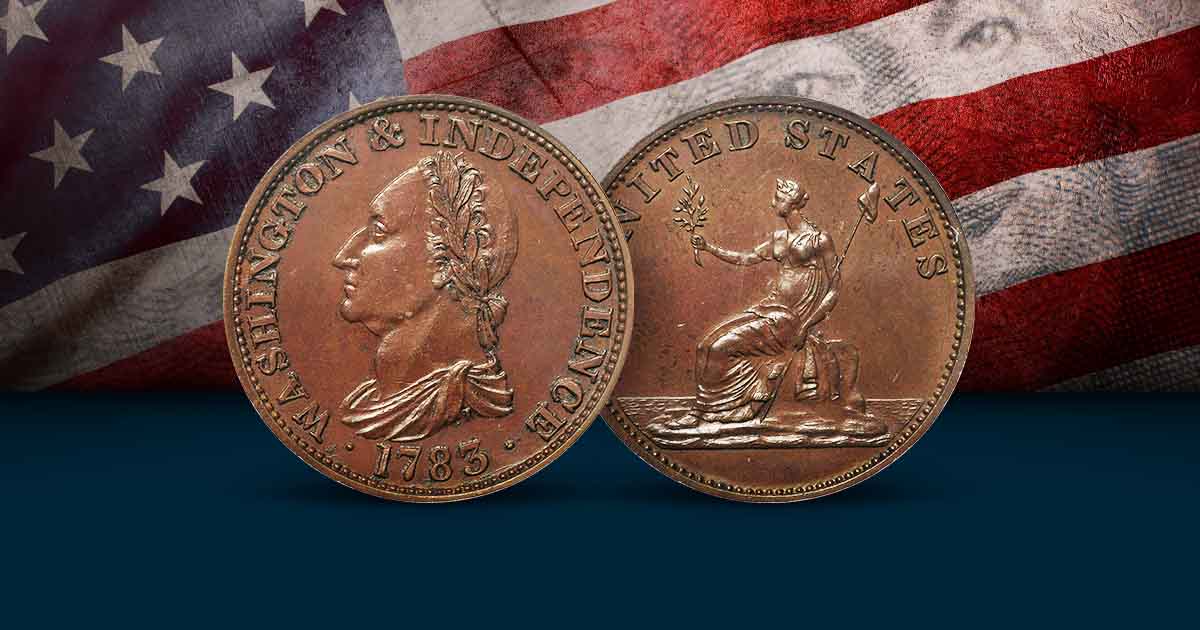
George Washington Draped Bust Tokens, dated 1783, occupy a specific niche in early American numismatics. Although they resemble Revolutionary-era pieces, specialists agree they were struck later. Instead, they are generally treated as later-made tokens, often associated with production in England during the 19th century. They were made to meet demand for Washington-themed pieces, and some examples likely circulated as token-style coppers. Many pieces, including later restrikes, also appear to have been produced with collectors in mind.
Origins and Dating: 1783 On the Coin, 1800s in Production
Each Draped Bust token bears the date 1783. Research, however, places their manufacture between about 1820 and 1840, with some restrikes as late as 1848. The pieces are commonly linked to Birmingham-style token manufacture based on their overall fabric and edge treatments, including lettered-edge regular issues and later plain-edge or engrailed-edge restrikes that differ from typical late 1780s U.S. production. Several references connect these Washington pieces to the Soho Mint ecosystem in Birmingham, England, where skilled die sinkers and large-scale copper production made such tokens feasible.
As a result, many surviving pieces are sharply struck and remain in high grade. While some pieces did circulate as tokens, the overall preservation of many examples suggests substantial quantities were made for collectors, for token commerce, or both, rather than being products of hard wartime circulation.
Designs and Major Varieties
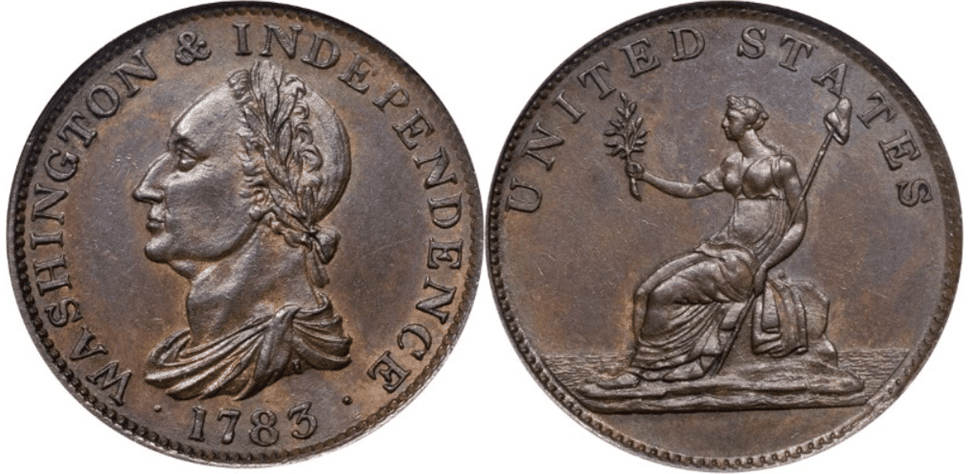
The obverse features a left-facing portrait of George Washington wearing a laurel wreath. The bust is “draped,” meaning Washington is shown with classical clothing, often described as toga-like, echoing the era’s taste for Roman republican symbolism. Around the portrait is the legend “WASHINGTON & INDEPENDENCE,” with the date “1783” below or within the obverse inscription layout.
The reverse pairs that message with an early Liberty motif. Liberty is shown seated, holding a staff topped with a cap (a liberty cap) and an olive branch, with “UNITED STATES” across the upper periphery. The combination of Washington on one side and Liberty on the other makes the token read like a patriotic medallic “cent,” even though it is not a federal coin.
Collectors typically group George Washington Draped Bust tokens into six major types, distinguished by portrait details, composition, and edge treatments:
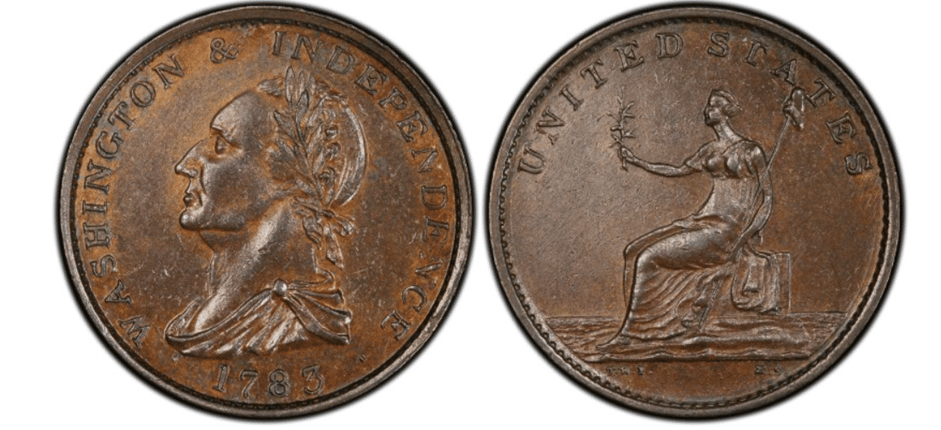
- No button at drapery: the drapery at Washington’s neck lacks the small button seen on another variety.
- With button at drapery: a small button is visible at the drapery near the neck, with the rest of the design essentially matching the no-button type.
- Draped Bust in brass: produced in much smaller numbers than standard copper pieces and considered a scarcer specialty composition.
- Copper restrike, plain edge: later pieces have a plain edge and usually appear in prooflike condition.
- Copper restrike, engrailed edge: another restrike format uses an “engrailed” edge, a decorative, scalloped-style edge treatment that contrasts with the plain-edge copper restrikes.
- Silver restrike, engrailed edge: struck in silver with an engrailed edge and produced in small numbers.
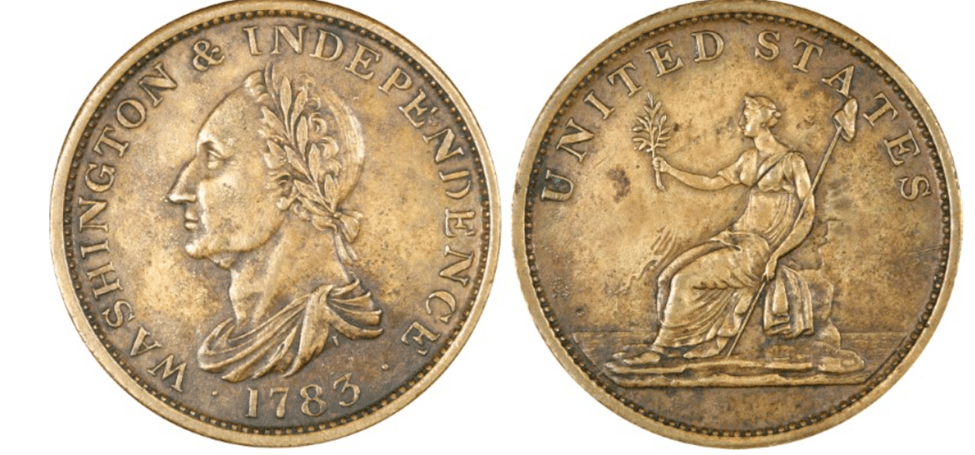
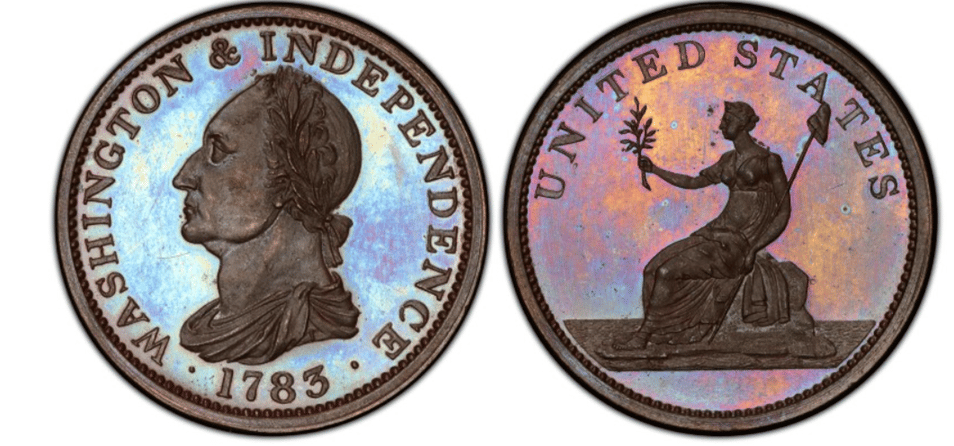
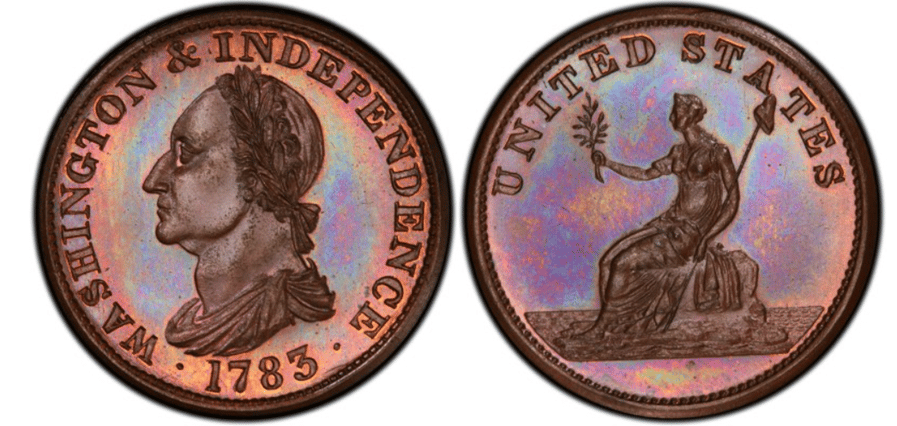
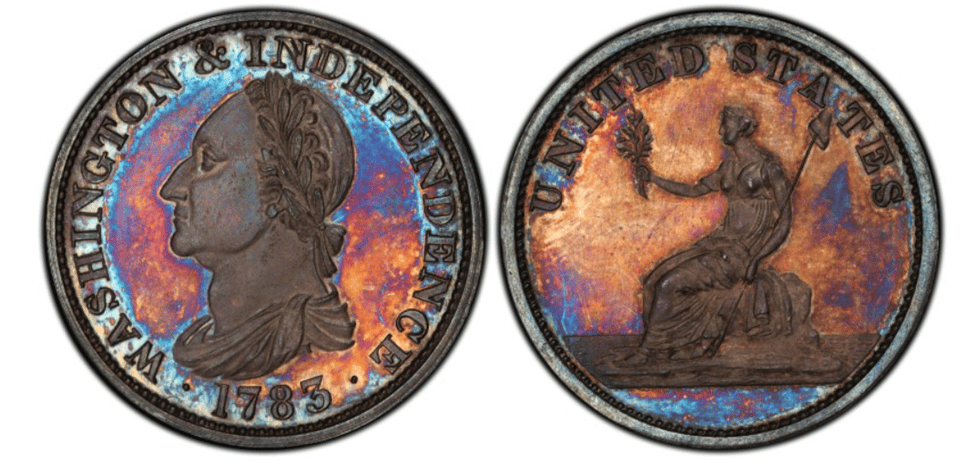
Taken together, the 1783 Draped Bust Washington tokens are best understood as patriotic “Washington pieces” that borrow Revolutionary dating and symbolism, but reflect later token production, multiple collectible varieties, and a strong, enduring demand for Washington imagery in the early American collecting tradition.