

The 400th Anniversary of the Western Arrival of Columbus
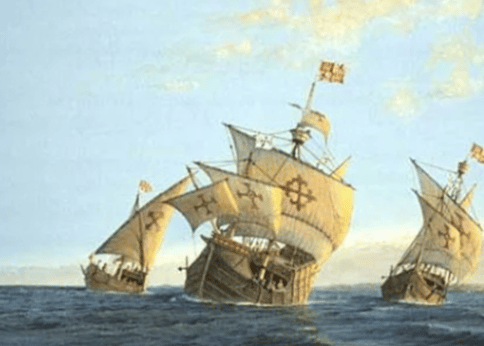
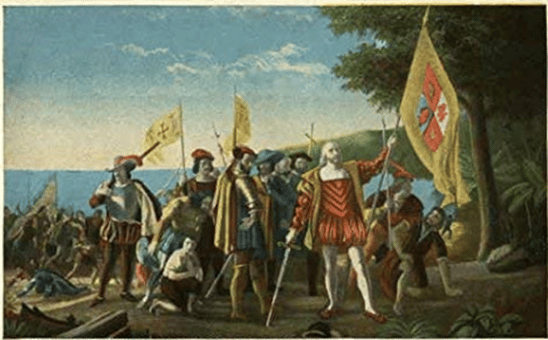
Sailing for the Spanish Crown, Christopher Columbus sailed west from Spain in August of 1492 in three ships – the Nina, Pinta, and Santa Maria. He, like most individuals at the time, misunderstood the size of the Earth and the distance to Asia. Columbus sailed West to hopefully encounter the spice-laden lands of India and China. After two months, unbeknownst to him, he had hardly sailed far enough west. He first landed in the Caribbean at San Salvador in 1492, and on his third voyage in 1498, he reached the mainland of South America, in present-day Venezuela.
The World’s Columbian Exposition.
As the 400th anniversary of Christopher Columbus’s 1492 voyage approached, the United States, like several other nations, sought an appropriate way to commemorate the event. Congress approved plans for a large international exposition to be held in Chicago, Illinois, known as the World’s Columbian Exposition.
Although originally intended to open in 1892, construction delays postponed the fair’s opening until May 1, 1893, and it remained open for nearly six months. The exposition was built at a cost exceeding $28 million and covered approximately 690 acres. During its run, the fair attracted more than 27 million visitors, making it one of the most significant international exhibitions of the 19th century.
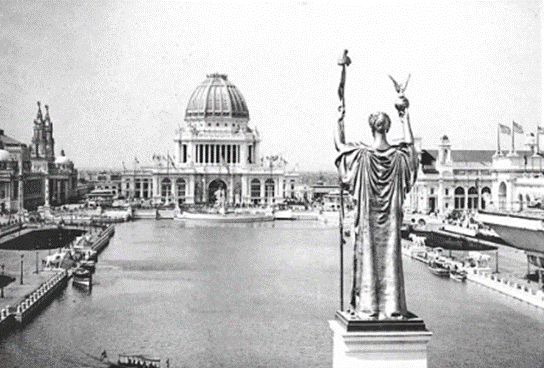
Forty-six countries exhibited at the Fair, and the United States had several important buildings. The “United States Government Building” housed the Treasury Department and the United States Mint exhibits. One of the most popular souvenirs of the World’s Fair was the 1892 and 1893 Columbian Exposition Commemorative Silver Half Dollars, which sold in the United States Mint exhibit hall for $1.00 each.
Design & Distribution Details
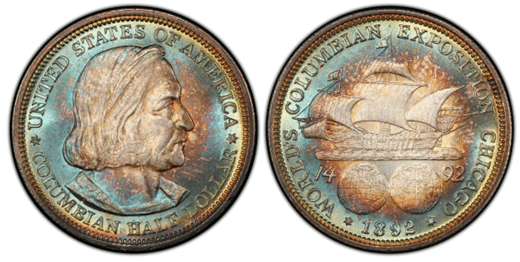
Charles E. Barber, the medallic artist, was in charge of the obverse of the Columbian Exposition Commemorative Silver Half Dollar, and George T. Morgan is credited with the reverse design of the coin. Warner’s design displayed Columbus in profile, facing right with the legends “UNITED STATES OF AMERICA” around the top periphery and “COLUMBIAN HALF DOLLAR” around the bottom periphery.
Warner’s reverse featured one of Columbus’s ships above the two hemispheres of the world. The legend “WORLD’S COLUMBIAN EXPOSITION CHICAGO” encircled the ship and globes, and the date (1892 or 1893) was located at the bottom periphery.
950,000 of the 1892-dated Columbian Exposition Commemorative Silver Half Dollars were struck and distributed, while in 1893, a total of 1,550,405 coins were struck and distributed. The first coin struck was purchased by the Remington Typewriter company as an advertising gimmick for $10,000. Beyond these mintages were also 100 Proof coins of each of these two dates.
Several years after the World’s Fair closed, some unsold coins were melted, while others were released into circulation at no premium. Expand your collection with this coin and explore other U.S. classic silver commemorative coins.