
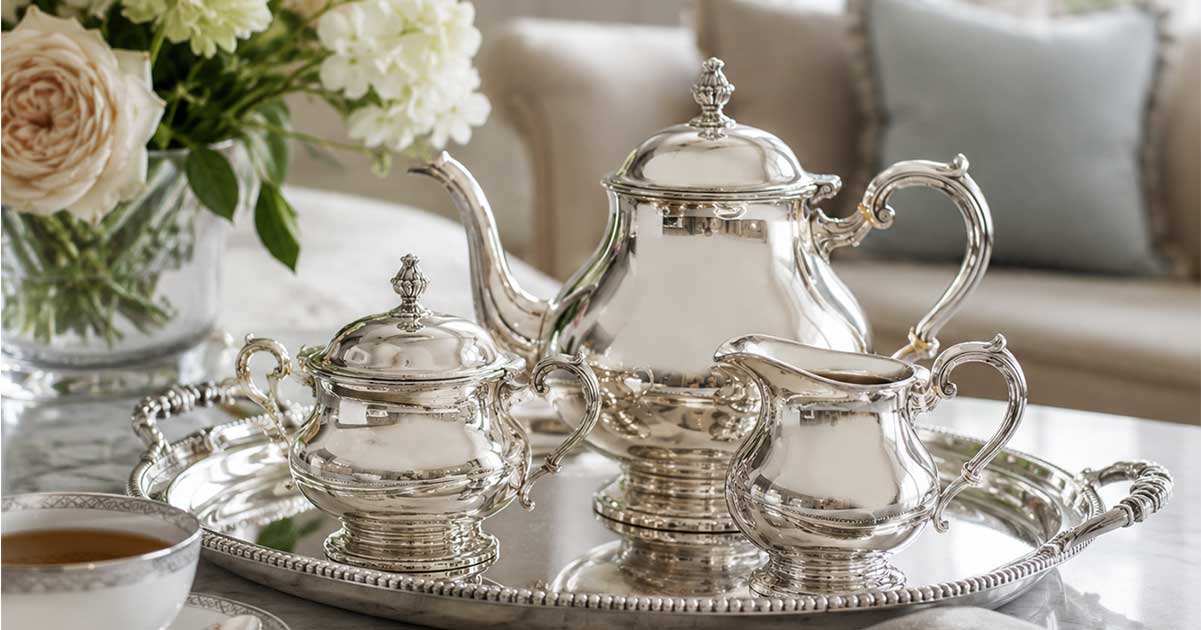
A silver tea set can feel too important to ignore and too impractical to keep. It may be an inherited service that has not been used in years, a display piece that no longer fits your home, or part of an estate that needs to be evaluated. Whether it includes only a teapot and creamer or a full matching service with tray, sugar bowl, waste bowl, and kettle, the right selling path depends on one thing first: what kind of silver it is.
A tea set that is sterling silver may have significant metal value because it contains real silver throughout most of the piece. A silver-plated tea set may still be attractive and saleable, but it is usually valued as décor, vintage tableware, or a collectible household item rather than as precious metal.
Start by Identifying the Metal
Before trying to sell a silver tea set, look carefully for marks on each piece. Check the underside of pots, bowls, trays, and stands. Also inspect lids, feet, rims, handles, and bases. Marks such as “sterling,” “925,” or “.925” usually indicate sterling silver, which is 92.5% silver. Marks such as 900, 800, 825, 830, or 850 may indicate other silver standards.
Silver-plated pieces often show marks such as EP, EPNS, electroplate, silver plate, or silver on copper. These items can look very similar to sterling silver, especially when polished, but the layer of silver is thin. That difference can dramatically change the type of buyer who will be interested.
Do not assume every piece in the set is the same. A tray might be plated while the teapot is sterling, or a replacement lid might differ from the original piece. Each item should be checked individually.
Why Someone Might Sell a Silver Tea Set
Many people sell silver tea sets because the items no longer fits their lifestyle. Formal tea and coffee services require space, polishing, and careful handling. They can be beautiful, but they are often stored away for decades rather than used.
Selling may also be practical during downsizing, estate settlement, inheritance planning, or a move. A tea set may carry family history, but not every heirloom is something the next generation wants to maintain. In that case, selling can convert an unused object into funds that are easier to divide, save, invest, or spend.
Market value is another reason. Sterling silver has value tied to the price of silver, so a set that has been sitting untouched may be worth evaluating. Damage, tarnish, dents, monograms, or missing pieces may reduce decorative appeal, but they do not necessarily erase the value of the silver content.
How Silver Tea Sets Are Valued
A buyer will typically consider purity, weight, condition, construction, and market demand.
Purity is the percentage of actual silver in the item. Sterling silver contains 92.5% silver. Other standards contain different amounts. Silver plate usually has very little recoverable silver compared with sterling.
Weight is important, but tea sets can be complicated. A teapot, creamer, or sugar bowl may include wood, resin, solder, hinges, pins, or other non-silver elements. Some bases may be weighted. Handles and finials may be made from heat-resistant materials. Because of that, the total scale weight is not always the same as the recoverable silver weight.
Condition matters differently depending on the buyer. A precious metals buyer may still value a dented sterling teapot for its silver. An antique buyer may care much more about original condition, maker, pattern, completeness, and presentation.
A simplified melt-value estimate begins with:
Silver weight × purity × current silver price = estimated silver value
That estimate is not the same as a final offer. Appraisal, testing, refining, handling, overhead, and non-silver components can all affect the amount offered.
Finding the Right Buyer
If the set is sterling silver and the main value is metal content, a precious metals buyer may be the most straightforward option. This path is often useful for incomplete sets, damaged pieces, heavily monogrammed items, or tea services that do not have strong collector demand.
If the set has antique, maker, or design significance, an antique dealer or auction house may be worth considering. A complete service by a desirable maker may bring more from a collector than from a buyer focused only on silver content. The trade-off is time, commissions, and uncertainty.
If the set is silver-plated, online marketplaces, estate sales, vintage shops, and consignment stores may be better fits. Plated tea sets are often purchased for decorating, weddings, staging, entertaining, photography, or vintage resale. Their value usually depends on appearance, completeness, condition, and style rather than silver recovery.
The same logic applies across many silver items. Someone learning how to sell silver ring jewelry should identify the metal first, then match the item with the buyer who values it properly.
Why Sell to APMEX?
APMEX can be a suitable option when a tea set is sterling silver or qualifies as pure or sterling silver décor. Our process is designed for sellers who want a clear path without visiting multiple local buyers. Sellers can request a free appraisal kit, use a prepaid shipping label insured up to $5,000, and receive an offer after the items are appraised. If the offer is accepted, payment is issued within one business day. If the seller declines, the items can be returned. For sterling silver tea sets, this creates a step-by-step process from evaluation to payment with a precious metals buyer.
Prepare the Set Before Selling
Make a simple inventory before you sell. List each piece, including the teapot, coffee pot, sugar bowl, creamer, waste bowl, tray, kettle, stand, or accessories. Photograph the full set, each individual item, and all visible marks.
Avoid heavy polishing. Light cleaning may help reveal marks, but aggressive polishing can soften details or reduce appeal for antique buyers. If the set may be collectible, preserving its condition is more important than making it shine.
Separate sterling-marked pieces from plated or unmarked pieces. Note any repairs, dents, missing parts, replacement lids, loose handles, or non-silver materials. If shipping, wrap each piece separately and protect lids, spouts, feet, and handles from pressure.
Key Takeaways
Selling a silver tea set begins with identification. Sterling silver, silver plate, continental silver, and mixed-material pieces can look similar but sell through different channels. Sterling sets may be appropriate for precious metals buyers. Antique or maker-quality sets may deserve collector-focused evaluation. Silver-plated sets often perform better as vintage décor or usable serving pieces.
The soundest decision comes from knowing the marks, understanding the likely source of value, and choosing a buyer accordingly. A tea set that has spent years in storage may still hold practical value, whether as silver content, collectible tableware, or decorative vintage goods.