
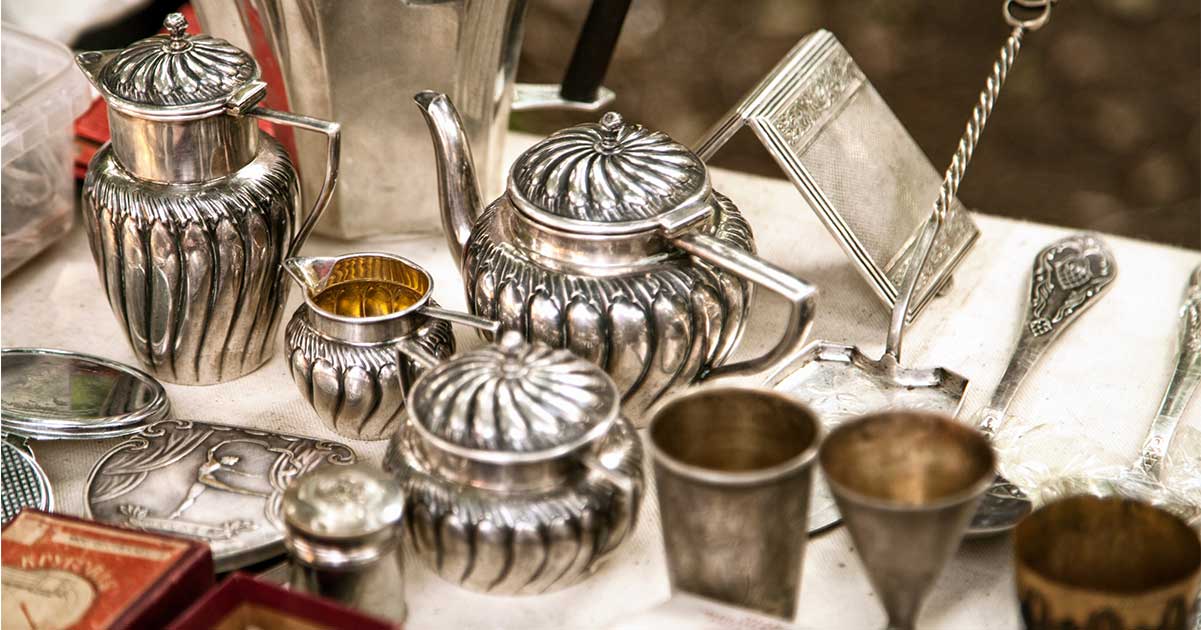
Antique silver often carries two kinds of value. It may simply contain real silver, a precious metal with market value. The second is personal, which can complicate things: age, craftsmanship, maker, pattern, condition, provenance, and family history can create collectible or sentimental value. That combination can make antique silver feel difficult to sell. Owners may wonder whether a tray, tea set, candlestick, flatware service, or decorative bowl should be treated as a collectible, a family heirloom, or simply silver by weight.
The answer depends on what you have. Some antique silver pieces are worth more for their artistry, maker, rarity, or historical appeal. Others are valued primarily for their metal content. Understanding the difference can help you decide whether to keep, appraise, consign, or sell old silver for its precious metal value.
What Counts as Antique Silver?
Antique silver generally refers to older silver items, often including flatware, hollowware, jewelry, serving pieces, decorative objects, and household items. Common examples include:
- Sterling silver tea sets, coffee pots, creamers, and sugar bowls
- Silver trays, bowls, cups, goblets, and candlesticks
- Flatware sets, serving spoons, ladles, fish knives, and specialty utensils
- Older silver jewelry, lockets, brooches, chains, and rings
- Decorative handles, knobs, boxes, picture frames, and small household objects
The most important distinction is whether the piece is solid silver, sterling silver, coin silver, continental silver, or silver plate. Sterling silver is typically 92.5% silver and is often marked “sterling,” “925,” or “.925.” Continental silver may show marks such as 800, 825, 830, or 850, reflecting different silver content. Silver plate, by contrast, has only a thin layer of silver over a base metal and usually carries far less intrinsic metal value.
Why People Sell Antique Silver
People sell antique silver for many practical reasons. Some inherit pieces they do not use. Others are downsizing, settling an estate, clearing storage, or converting unused valuables into cash. Formal dining and traditional entertaining have changed, which means full silver services, tea sets, and polished display pieces may no longer fit the way many households live.
There are also maintenance considerations. Antique silver often requires storage, cleaning, and occasional polishing. Large pieces take up space. Fragile or ornate items can be difficult to display safely. Monogrammed pieces may have sentimental charm but limited resale appeal to a private collector.
Selling can also be a financial decision. Because silver is a traded precious metal, the value of solid silver items is tied to the silver market. When silver prices are favorable, pieces that have been sitting unused for years may become more attractive to sell.
The decision to sell old silver does not have to mean dismissing its history. It can simply mean recognizing that an item’s value may be more useful as liquidity than as an object in storage.
How Antique Silver Is Valued
Antique silver is usually evaluated in two ways: as a precious metal item and as a collectible object.
The metal-value side is based on purity, weight, and the current silver price. A sterling silver item contains 92.5% silver. A 900-marked item contains 90% silver. Continental silver standards vary. Once the buyer determines purity and silver weight, the item’s approximate melt value can be estimated.
A simplified formula is:
Item weight × silver purity × current silver price = estimated metal value
However, antique pieces can require closer evaluation. A weighted candlestick may contain filler material. A knife handle may be sterling but filled, while the blade may be stainless steel. A decorative object may include wood, glass, resin, steel, or other non-silver components. In those cases, the total weight is not the same as the silver weight.
The collectible-value side is different and often more complex. Some antique silver pieces may be worth more because of maker, rarity, design, pattern, historical period, condition, provenance, or demand among collectors. A manufacturer currently in demand or a complete pattern may command a higher premium. A damaged, heavily polished, incomplete, or common item may be valued closer to metal content.
Sterling Silver vs. Silver Plate
One of the most important steps before selling is separating real silver from silver plate.
Sterling silver is usually marked clearly, though older pieces may have hallmarks instead of plain words. Look on the underside of trays, near the base of hollowware, inside jewelry, on the back of flatware handles, or around rims and feet. Marks may include purity, maker, city, assay office, or date symbols depending on the country and period.
Silver plate may be marked EP, EPNS, A1, quadruple plate, silver on copper, or similar terms. These items may still have decorative or antique appeal, but they usually do not carry the same precious metal value as sterling silver. In many cases, silver plate is harder to sell for melt value because the silver layer is thin.
This distinction can change expectations dramatically. A sterling silver tray and a silver-plated tray may look similar to an untrained eye, yet their underlying metal value can be very different.
Where to Sell Antique Silver
There are several places to sell antique silver, and the best option depends on the item.
Antique dealers may be useful if a piece has collectible appeal. They may understand maker marks, pattern demand, period style, and decorative value. Auction houses may also be a fit for rare, important, or high-value pieces, especially when provenance or maker attribution matters.
Local coin shops, jewelry stores, and precious metals buyers may be more appropriate when the item’s value is mainly in the silver content. They can often test, weigh, and quote based on metal value. The benefit is speed and simplicity. The trade-off is that a buyer focused on the metal content is unlikely to pay a collector premium for desirable antique pieces.
Online precious metals buyers can be convenient for sellers who want a structured appraisal process without visiting multiple shops. This route may work well for sterling silverware, jewelry, décor, and mixed silver items, particularly when the pieces are incomplete, damaged, monogrammed, or unlikely to command a strong collector premium.
Why Sell to APMEX?
APMEX offers a simple way to sell qualifying old gold and silver items, including silver jewelry, sterling silverware, and gold or silver décor that is pure or sterling silver. Sellers can request a free appraisal kit and use a prepaid shipping label insured up to $5,000. Once we receive the items, our team appraises them and sends an offer. If you accept, payment is issued within one business day. If the offer is rejected, the items can be safely returned. For sellers who want a professional precious metals buyer and a clear process, we provide a practical path from appraisal to payment.
How to Prepare Antique Silver Before Selling
Start by inspecting each piece for marks. Sort pieces marked sterling, 925, .925, 900, or continental silver marks separately from silver plate. Keep knives, weighted candlesticks, filled handles, and mixed-material pieces in their own group because their silver weight may differ from total weight.
Avoid aggressive polishing. Light cleaning may make marks easier to read, but over-polishing can reduce detail and may harm collector appeal. If you suspect a piece is rare, historically important, or made by a desirable silversmith, consider having it evaluated before selling strictly for melt value.
Take clear photos, note visible markings, and make a basic inventory. Include the type of item, quantity, approximate weight, condition, and any known family or ownership history. Documentation can be useful, especially for older pieces or complete sets.
Key Takeaways on Selling Antique Silver
Antique silver can be valuable for its metal content, its collectible appeal, or both. The best outcome starts with knowing what type of silver you own and its purity.
Before you sell old silver, identify marks, separate plated items from solid silver, understand that condition and maker can affect collectible value, and compare selling options based on your priorities. If the piece is rare, a collector-focused route may be appropriate. If the value is primarily in the metal, a precious metals buyer may offer the most straightforward process.
Selling antique silver is ultimately about converting unused value into something more useful. With the right preparation, an item that has spent years in a drawer, cabinet, or estate box can become a clear, practical source of liquidity.