

The 1792 Birch Cent is a well-documented early U.S. pattern cent, produced during the first year of formal mint experimentation. Although it never entered regular circulation, it reflects the practical and symbolic choices the nation faced when turning the new monetary statutes into actual coinage.
Origins in the Coinage Act Era
The Coinage Act of 1792 established the U.S. Mint and specified that the cent should contain 264 grains of pure copper. The statute linked the cent’s value to its metal content, yet that metal weight would have produced a large, heavy coin, prompting officials to experiment quickly with alternatives. The Birch Cent belongs to that prototype phase, alongside other 1792 cent experiments such as the Silver Center Cent.
The coin is traditionally associated with engraver Robert Birch, whose name appears on the design and whose style is often discussed alongside other early federal patterns and small silver issues of 1792. Contemporary records confirm that senior figures, including George Washington and Thomas Jefferson, oversaw early Mint operations, and that pattern cents received their close review. Specific stories of live pattern demonstrations, particularly for the Birch Cent, come from later accounts rather than primary documents.
Design and Messages
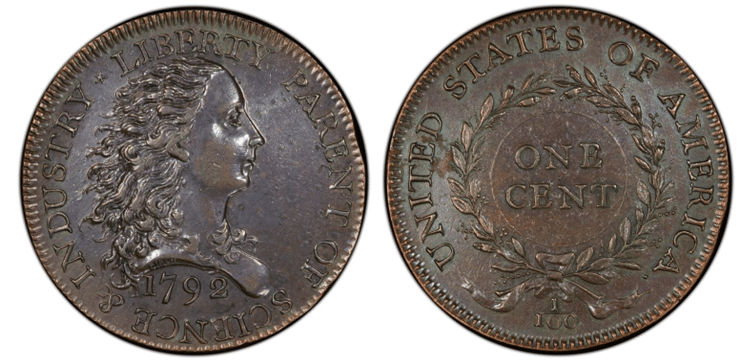
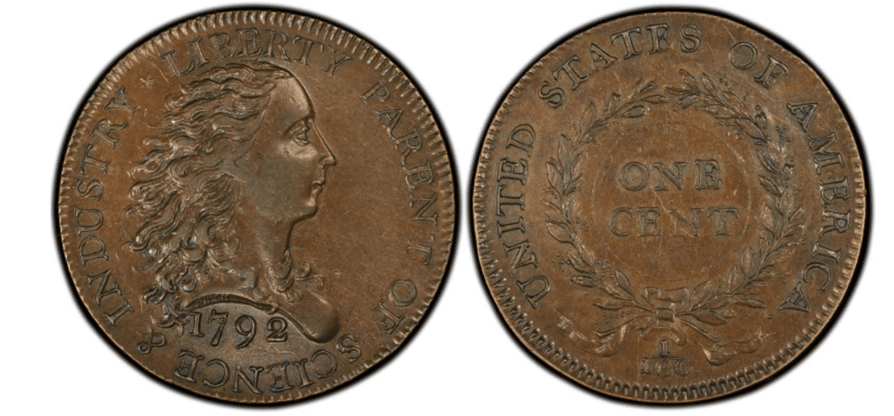
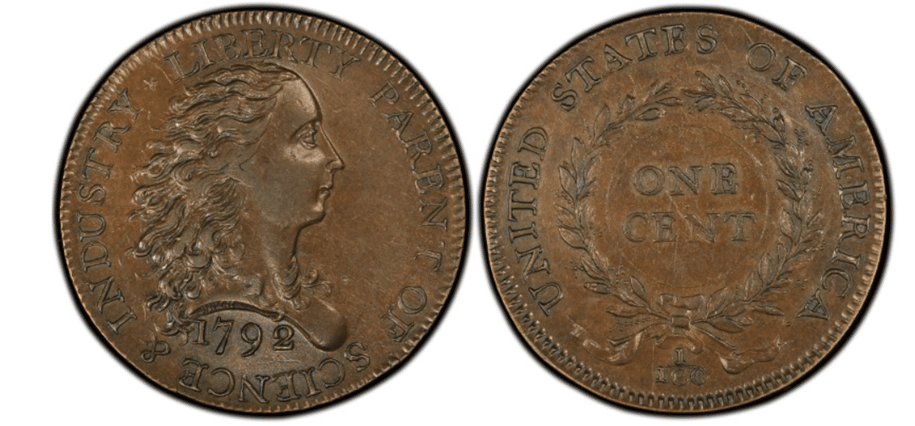
On the obverse, Liberty faces right with flowing hair, a deliberate preference for allegory over living portraiture. Around the rim appears an early American motto, “LIBERTY PARENT OF SCIENCE & INDUSTRY,” with the date 1792 below and “BIRCH” on the truncation.
The reverse centers “ONE CENT” within a laurel wreath tied at the base, with “UNITED STATES OF AMERICA” around the periphery and “1/100” below the wreath. Taken together, the devices and inscriptions read like a compact mission statement: a national coin that signals unity, denominational clarity, and an Enlightenment view of progress.
That motto is distinctive. Rather than emphasizing power or lineage, it frames liberty as a prerequisite for knowledge and productive enterprise. Modern researchers note that the phrase aligns with early American goals of connecting freedom to scientific and economic progress.
Varieties and Surviving Populations
Birch Cents are typically discussed in four notable varieties, chiefly distinguished by edge treatments and, in one case, by composition and reverse details.
- The plain edge copper variety is widely cited as having only two known survivors.
- A lettered edge variety bears ‘TO BE ESTEEMED * BE USEFUL *’ and is commonly reported at roughly 6–8 known examples, depending on the census and reference.
- A second lettered edge variety reads ‘TO BE ESTEEMED BE USEFUL’ with a single star after USEFUL and is generally cited as having two known surviving pieces.
- Finally, a unique white metal striking bears the reverse inscription ‘G.W. PT’ (for George Washington, President) in place of the fraction and is treated as a distinct Judd variety (J-6).
Why Collectors Watch Every Appearance
With survivorship measured in single digits, Birch Cents function less like a collectible type and more like a set of individually pedigreed artifacts. Leading grading and reference services track each piece by variety and provenance. Auction appearances can shift market expectations because so few opportunities arise to bid on them.
The 1792 Birch Cent illustrates how the new republic balanced law, economics, and symbolism. Its statutory weight standard, its rejection of personal portraiture, and its explicit motto about science and industry make it a small copper document of national self-definition in 1792.