
The Mystery of 1787 Auctori Plebis Tokens
The Auctori Plebis Token is a colonial era token of uncertain origin. No one is certain who made it, exactly where it was struck, or why it was commissioned. However, the piece is consistently treated in the numismatic record as an American colonial collectible with strong Connecticut connections, and that examples were known and traded in an Atlantic market that included both Britain and North America.
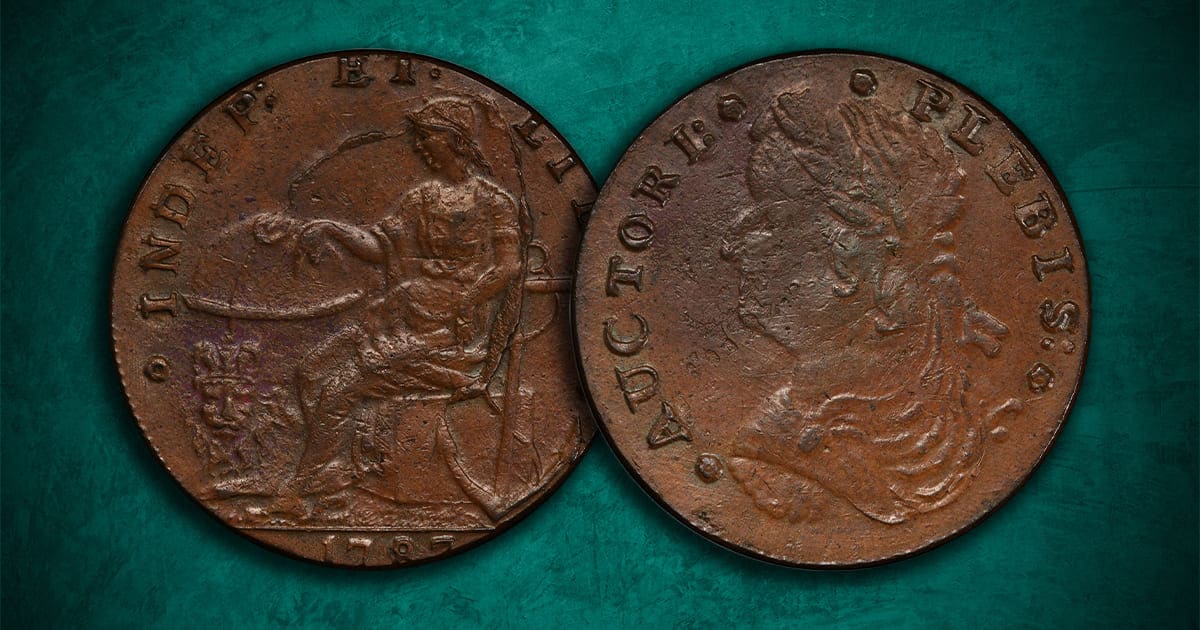
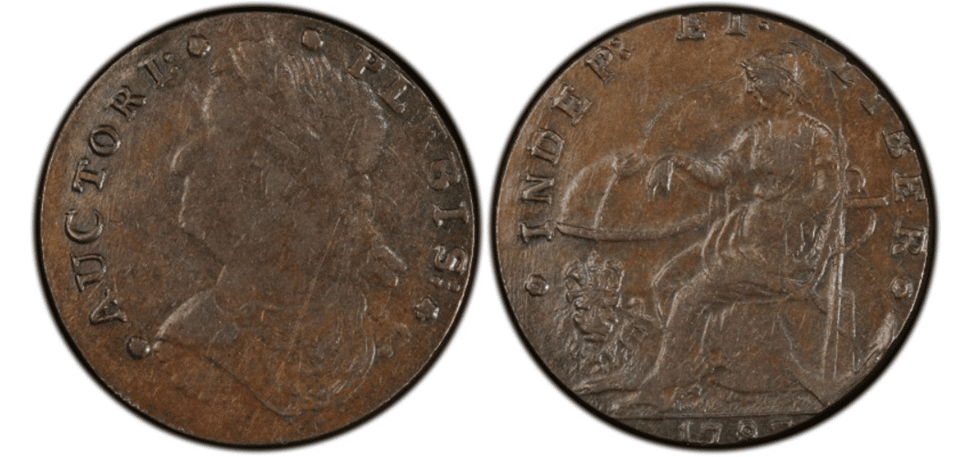
The design closely resembles Connecticut copper coinage of the late 1780s, especially the left facing bust style used on many Connecticut copper issues. Around the obverse periphery appears the Latin legend AUCTORI PLEBIS, commonly translated as “BY THE AUTHORITY OF THE PEOPLE,” a phrase that reads as deliberately civic and anti-royal. The reverse depicts a seated Liberty figure facing left. In execution, she still looks closer to Britannia than to the later, more distinctly American “Liberty” motifs, a reminder that many American iconographic choices were still evolving in the decade after independence. A crowned lion rests at her feet, a clear allusion to Great Britain, while the reverse legend INDEP ET LIBER, commonly rendered “INDEPENDENCE AND LIBERTY,” frames the design and reinforces the post-Revolutionary context implied by the inscriptions.
Those political legends are one reason it is believed the tokens were intended for circulation in America. At the same time, the question of manufacture has remained stubbornly open. The leading view today is that the tokens were likely produced in England for the American market, with Birmingham often suggested because the city was a major hub for private copper and token production in the period.
Auctori Plebis Clues: Die Type & Date
Specialists have suggested comparing letter punches and other die characteristics to those used on contemporary British halfpenny token issues as a way to narrow the dies’ workshop of origin. No definitive match has been found, which keeps the question unsettled and may indicate the dies were prepared specifically for this American themed issue rather than borrowed from a known British token series.
Surviving specimens show diagnostic production traits that collectors and researchers use to discuss chronology and die life. Many examples appear in a late die state with prominent die cracks, including a crack described as running from the reverse figure’s head on one well preserved example, and sizeable cracks on another piece before and after the central reverse figure. These recurring cracks matter because they imply sustained use of a limited die pair, consistent with a small output and with the scarcity encountered today in both private collections and the marketplace.
Even the date can be interpreted cautiously. While the token is dated 1787 on the reverse, dated legends on private coppers can function as political statements or marketing signals as much as strict mint year markers. Collectors interested in colonial era pieces can browse APMEX’s selection of related tokens and early American coinage, but the Auctori Plebis token remains a specialized pursuit precisely because its origin story is still being debated and because high quality survivors are few.