
Fugio Coppers of 1787: America’s First Federal Cent
In the years after independence, the United States did not yet have a stable, standardized monetary system. Everyday commerce relied on a mix of foreign coins, state issues, private tokens, and many lightweight or counterfeit pieces. Spanish silver, Dutch and French coins, and familiar British denominations all appeared in trade, often alongside locally produced copper. Against that backdrop, early national leaders viewed a dependable federal copper coin as both an economic necessity and a symbol of national cohesion.
On April 21, 1787, the Congress of the Confederation authorized the Board of Treasury to contract with James Jarvis for 300 tons of copper coins struck to the federal standard. Congress later directed the coin’s devices and legends, including a design instruction issued on July 7, 1787. The design is commonly attributed to Benjamin Franklin, whose influence is most visible in the coin’s concise moral and civic slogans.
Design and Symbolism
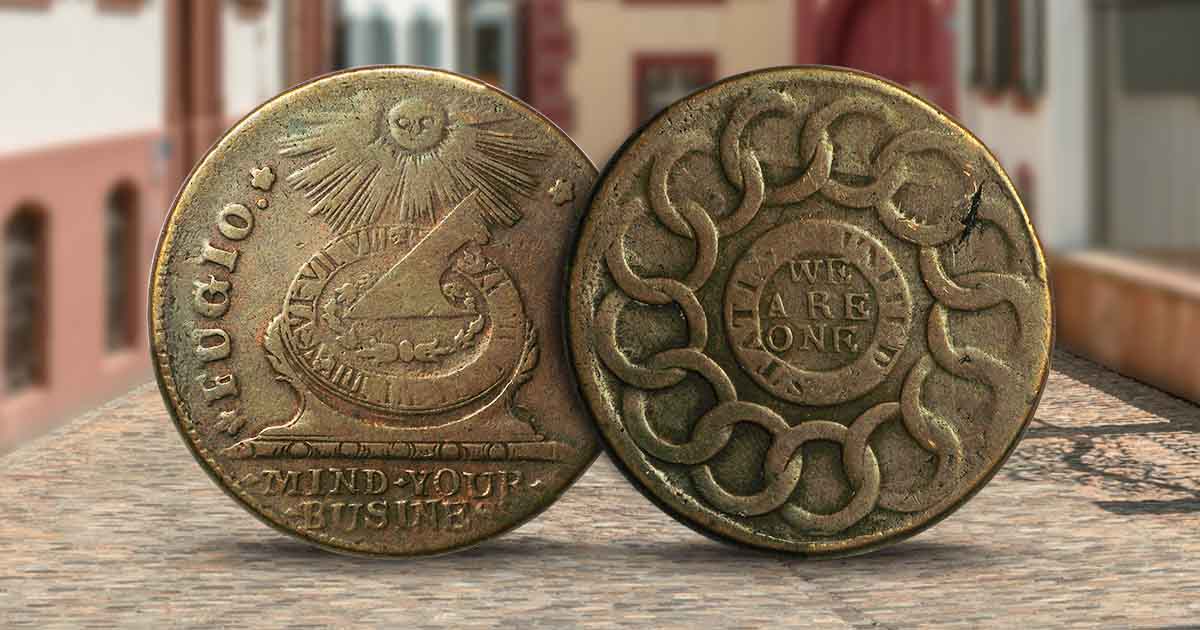
The obverse shows a sun shining down on a sundial with the word “FUGIO,” a Latin term commonly rendered as “I FLY” or “I FLEE”, and typically referenced time passing. Beneath the device is the instruction “MIND YOUR BUSINESS”, a phrase often connected to Franklin’s practical worldview, urging personal responsibility and industriousness.
The reverse shows thirteen linked rings symbolizing the original thirteen states. Many examples feature “UNITED STATES” around the design and “WE ARE ONE” in the center, often paired with “AMERICAN CONGRESS” in the central device, with some rare reverse varieties differing from the most common layout. The unity theme recalls the 1776 Continental Currency patterns that influenced the Fugio design.
Although later U.S. coinage adopted “E PLURIBUS UNUM” as a national motto on gold and silver issues, the Fugio cent’s “WE ARE ONE” did not carry forward in the same way. The chain motif itself also became controversial. When chain imagery appeared on the 1793 Chain Cent, contemporary critics derided it as “Liberty in Chains” and treated the chain as a bad omen for liberty. The design was quickly replaced the same year by the Wreath cent.
Production, Varieties, and Legacy
Fugio cents were struck in 1787 under a contract awarded to Connecticut coiner James Jarvis, whose operations were based in New Haven. Congress authorized the Board of Treasury to contract for 300 tons of copper coin in the April 21, 1787, resolution. Later accounts also repeat allegations that Jarvis obtained the contract through a bribe, often described as an alleged $10,000 payment to Board of Treasury official William Duer. Samuel Broome, Jarvis’s father-in-law, oversaw key aspects of the coinage work.
Production fell short: only a fraction of the contracted copper became Fugio cents. The remainder of the copper and related production capacity became entangled with other copper issues, including large quantities of Connecticut coppers, and accusations followed that profits were prioritized over meeting federal standards. The Fugios themselves were often criticized as underweight, contributing to public reluctance and limited circulation.
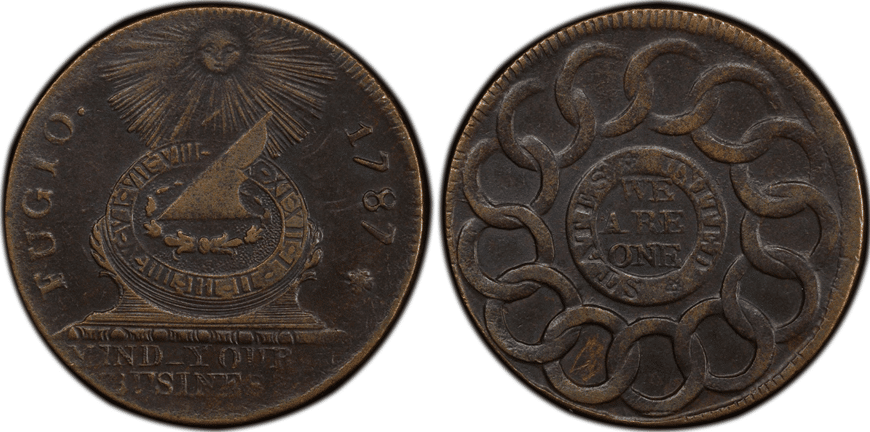
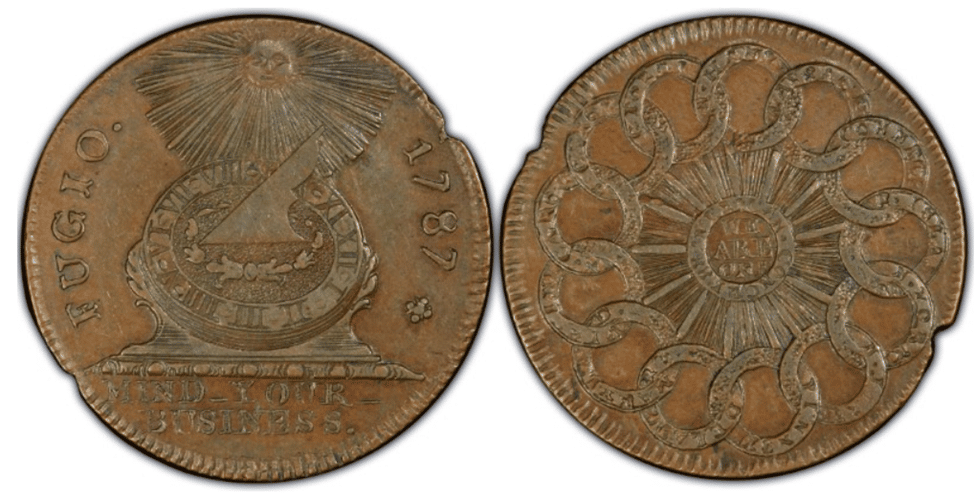
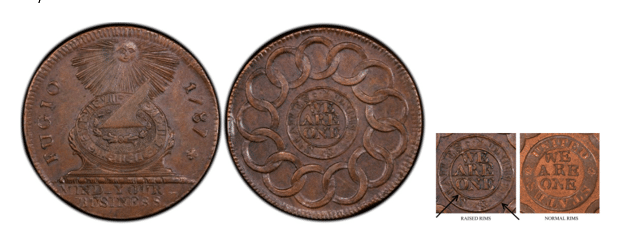
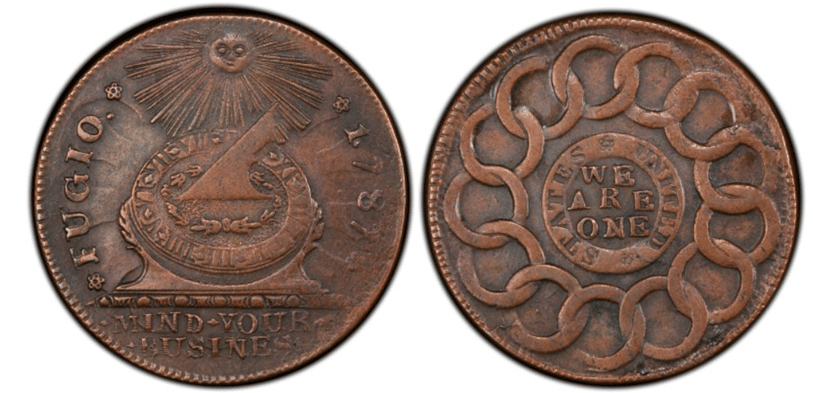
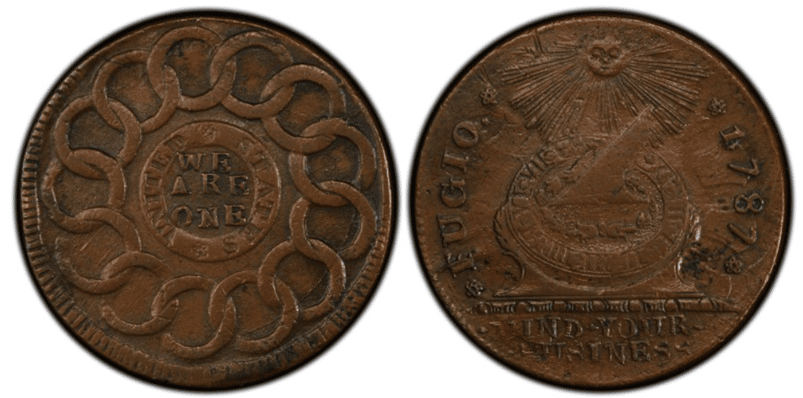
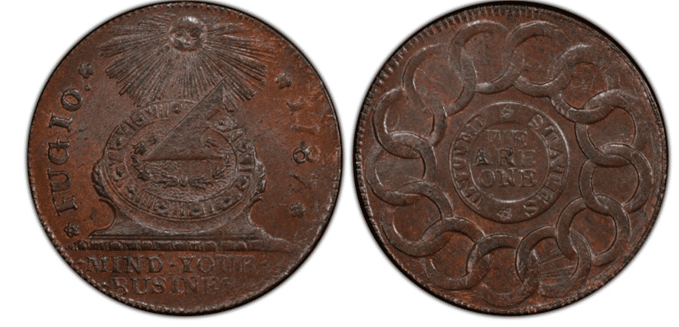
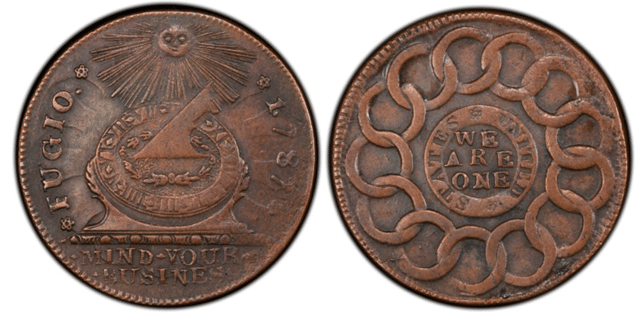
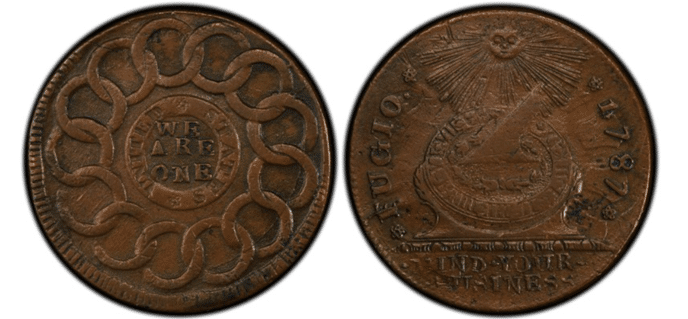
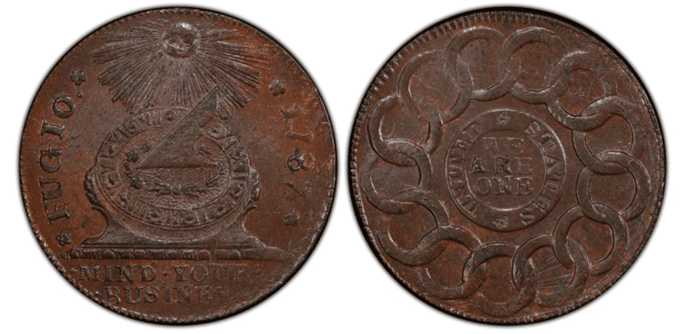
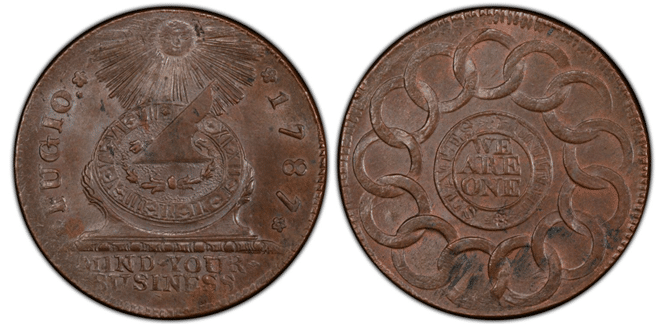
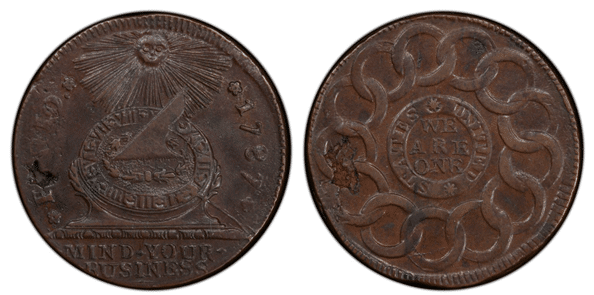
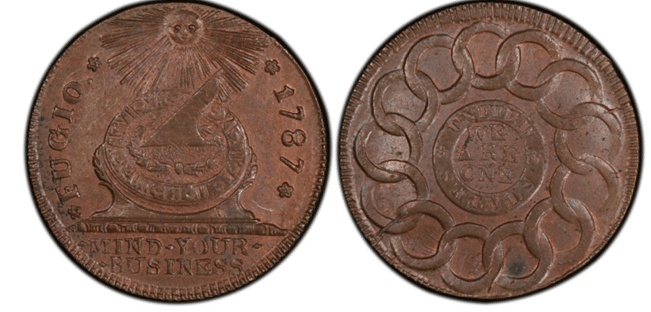
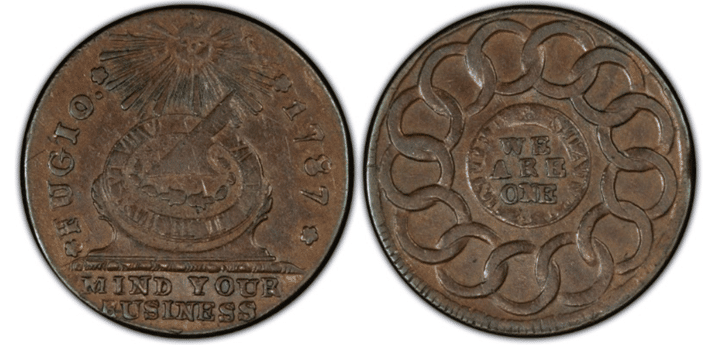
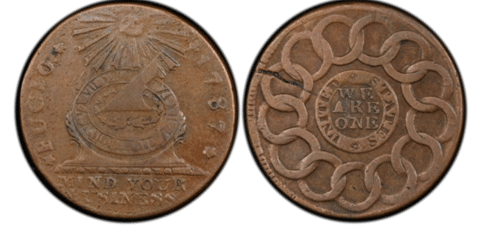
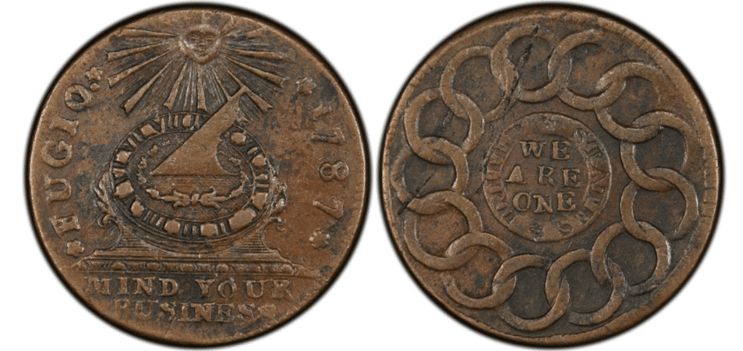
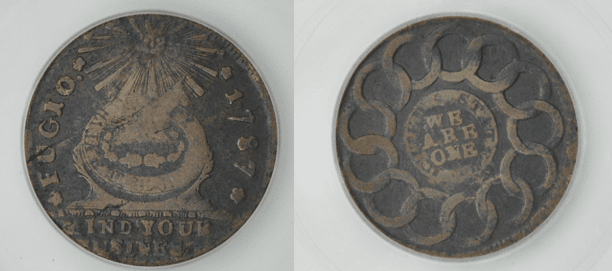
Numismatically, the series is famous for a wide range of varieties created by many die and reverse combinations. Varieties include “UNITED STATES” versus “STATES UNITED”, differing ray counts, and the less common “AMERICAN CONGRESS” reverse. These scarcer pieces often bring higher prices, while more typical examples remain accessible in lower grades.
Finally, the Fugio cent’s survival story is shaped by the Bank of New York hoard. A keg of Fugios acquired in the late 1780s was forgotten, rediscovered twice, then distributed as souvenirs and later sold to collectors, sharply increasing the availability of high-grade specimens.