
The 1792 Washington Roman Head Cent is one of the more unusual and scarce pieces connected to early American numismatics. It is not a regular-issue United States coin, and it was not struck by the U.S. Mint for circulation. Instead, it belongs to the fascinating group of Washington pieces produced during the period when the new nation was still deciding what its coinage should look like, what symbols it should use, and whether George Washington’s portrait belonged on American money at all.
That last question is what gives the Roman Head Cent its personality. At first glance, the piece seems to honor Washington. Look longer, and the design starts to feel overly dramatic. Washington is shown in a Roman style, facing right, with a stern profile and classical treatment that makes him look less like the modest republican leader he wanted to be and more like an emperor on an ancient coin. For collectors, for collectors, that tension captures the era’s debate about national imagery.
A Coin from a Politically Sensitive Moment
In the early 1790s, the United States was still young, cautious, and deeply aware of what symbols meant. The country had recently rejected monarchy, and many Americans were wary of anything that looked too royal or imperial. Putting a living president’s portrait on coinage could easily be read as a step toward the very system the Revolution had opposed.
Washington understood that risk. He did not want American coinage to resemble the coinage of kings. Earlier Washington cent designs had already raised concerns because they placed his image too prominently on proposed coinage. This is why the Roman Head design has been interpreted by many as something more pointed than a simple portrait piece.
The Roman Look
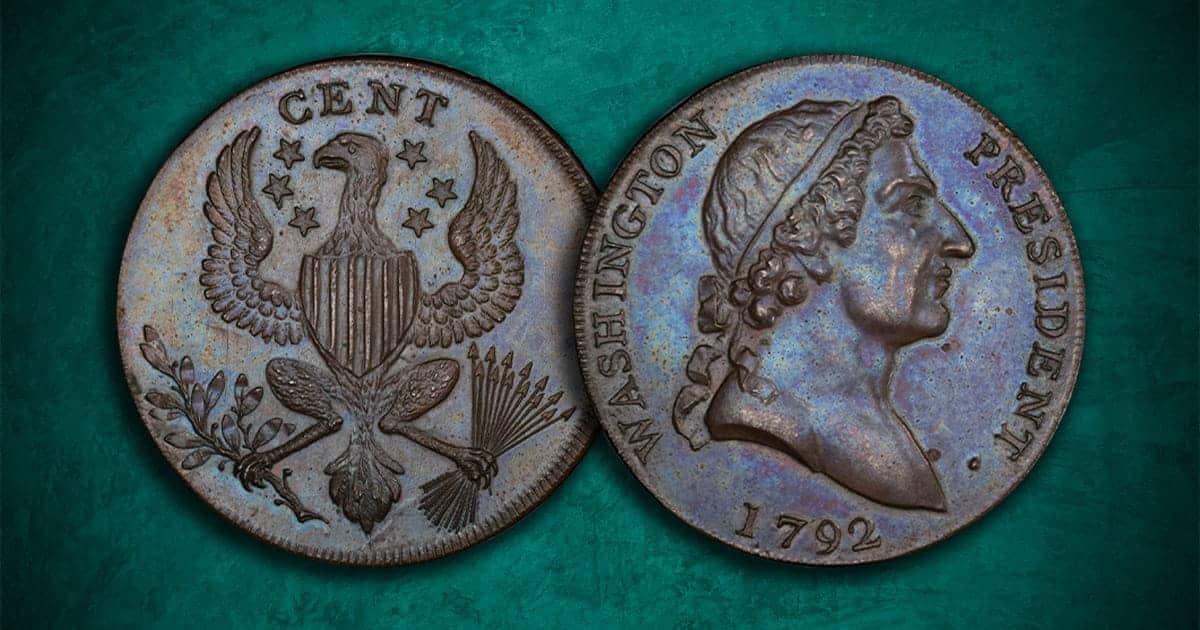
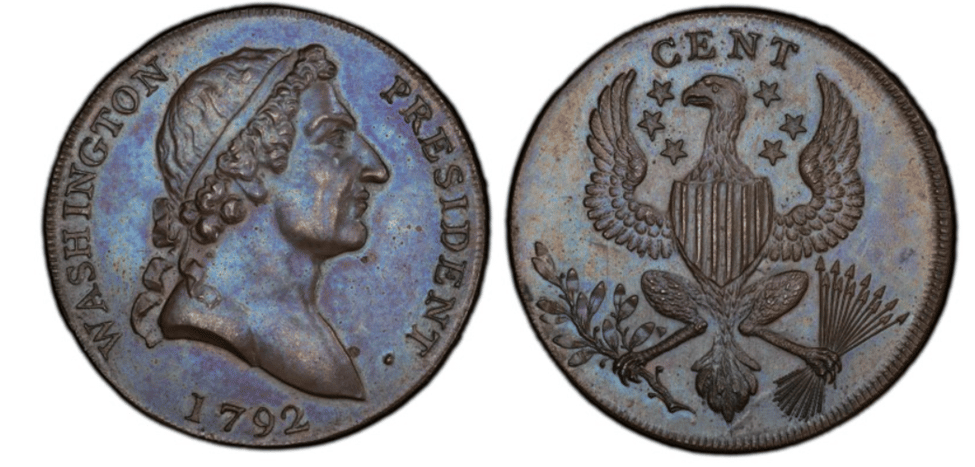
The obverse of the 1792 Washington Roman Head Cent shows Washington in a classical, Roman-inspired profile. The legend reads “WASHINGTON PRESIDENT”, with the date 1792 below. The portrait is not the familiar, restrained Washington of later American memory. It is sharper, more severe, and more theatrical.
That choice of style matters. Roman imagery carried a complicated meaning in the 18th century. On one hand, classical references were common in art, architecture, and political symbolism. The young republic borrowed heavily from Rome in its language of virtue, citizenship, and civic duty. On the other hand, Roman imperial portraiture could suggest power, vanity, and personal rule. That double meaning is part of why the coin remains so intriguing.
The reverse is equally distinctive. It features an eagle with “CENT” above it, stars nearby, arrows in one talon, and an olive branch in the other. The eagle is not the polished national bird later made familiar on U.S. coinage. It has an awkward, almost experimental quality, which adds to the piece’s unusual character.
Who Made the Roman Head Cent?
The Roman Head Cent is generally associated with John Gregory Hancock, a young engraver connected with private minting in Birmingham, England. Birmingham was an important center for token production, and private mints there created many pieces that circulated, advertised, commemorated, or appealed to collectors.
The Roman Head cent is often placed within that broader world of British-made Washington pieces and Conder-era token production. These were not federal coins struck under American authority. They were private pieces, created in a marketplace where political interest, commercial opportunity, and collector demand could overlap.
That origin helps explain why the piece feels both American and not quite American. It uses Washington, the eagle, arrows, olive branch, stars, and the word “CENT,” but it was produced outside the official U.S. coinage system. It reflects the young republic from across the Atlantic, filtered through British engraving, private enterprise, and the intense fascination Washington inspired.
Satire, Tribute, or Both?
One of the enduring questions is whether the Roman Head cent was meant as satire. Some interpretations see it as a pointed response to Washington’s reluctance to appear on coinage. If Washington did not want to look like a monarch, this design pushed the idea to an extreme by giving him the visual language of Roman authority.
But the answer is not perfectly settled. The Roman style may have been satirical, but classical imagery was also common and could be used admiringly. Many depictions of Washington drew from Roman republican ideals, portraying him as a Cincinnatus-like figure who gave up power rather than clinging to it. It may mock the idea of presidential coin portraits, or it may reflect the period’s habit of framing great public figures in ancient terms.
That uncertainty makes the coin more interesting, not less. It offers collectors insight beyond rarity—a noteworthy historical puzzle.
Rarity and Collector Interest
The 1792 Washington Roman Head Cent is extremely rare. Surviving examples are few, and the coin is treated as a major prize among collectors of Washington pieces, colonial-era coinage, early American-related tokens, and politically significant numismatic material.
Its rarity is only part of the appeal. Many rare coins are scarce because they were lost, melted, poorly saved, or lightly produced. The Roman Head cent is scarce and conceptually unusual. It is connected to Washington, but not in the clean, heroic way later commemorative pieces are. It belongs to the messy, experimental period before American coinage conventions were fully settled.
For that reason, the coin attracts attention from collectors who care about more than type and grade. It appeals to people interested in the politics of portraiture, the symbolism of the early republic, and the complicated relationship between admiration and authority in Washington’s public image.
Physical Characteristics
The Roman Head cent was struck in copper and is typically described as having a lettered edge. Its size and format place it among the Washington-related cent pieces of the period, though it was not a regular circulating U.S. cent. The combination of copper composition, prooflike production in some examples, and distinctive edge lettering helps specialists distinguish it from later copies, electrotypes, and reproductions.
Because genuine examples are so rare, authentication is essential; anyone encountering a piece that resembles the Roman Head Cent should seek professional certification before drawing conclusions about value. Replicas, copies, and later pieces inspired by the design are far more likely to appear than an original.
Why the Roman Head Cent Matters
The Washington Roman Head Cent matters because it captures a national argument in miniature. Should a republic put its leader on coinage? Does a portrait honor public service or elevate one person too highly? Can classical imagery celebrate virtue without suggesting empire?
Those were not abstract questions in 1792. They were part of how the United States defined itself. The Roman Head Cent survives as a copper reminder that early American money was not just about commerce. It was about identity, power, symbolism, and the careful distance the new republic wanted to keep from monarchy.