
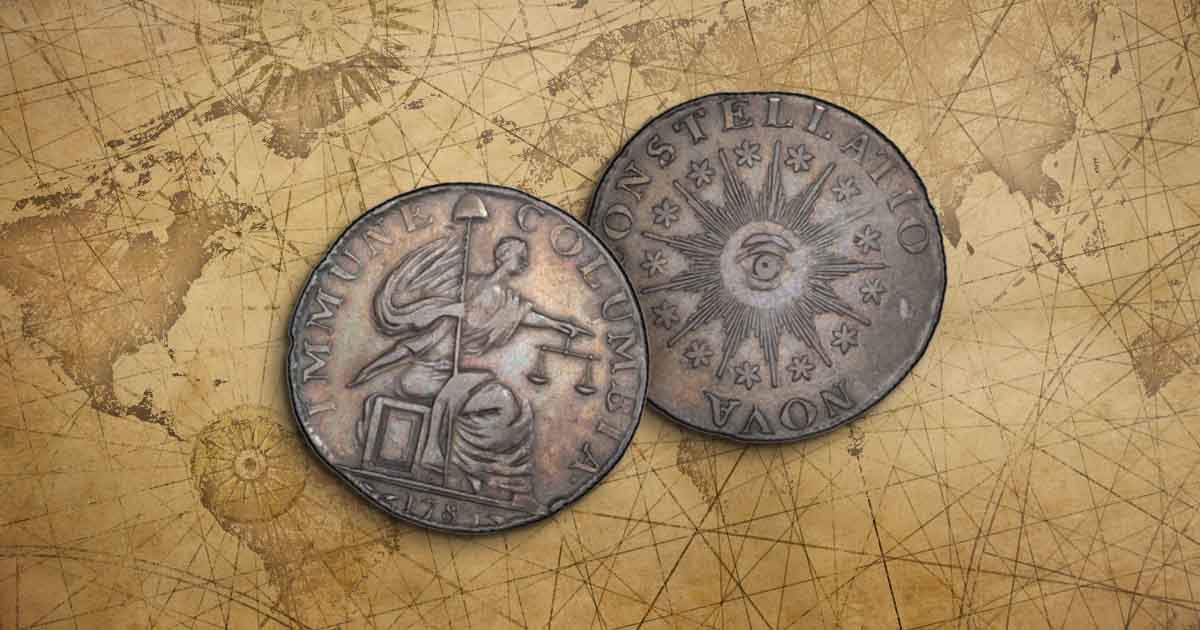
Immune Columbia Pieces of 1785 are among the most notable “proposed national issues” of the Confederation era. They are sometimes called 1785 Vermont Immune Columbia Coppers because the portrait punch resembles those used on Vermont coinage, even though the full obverse die does not match any other known Vermont die. As a group, these pieces are generally considered unofficial or privately made coinage, produced in a period when Americans were experimenting with what a national monetary identity might look like before the federal Mint became fully operational.
Origins and Intended Role
The Immune Columbia concept did not exist in isolation. The same general “Immune Columbia” idea appears paired with at least two other 1785 themes: one using a Nova Constellatio type reverse with the all-seeing Eye of Providence, and another connected to a King George III motif. That mix of patriotic symbolism and familiar British elements reflects how fluid the coinage landscape remained in the mid-1780s, when private minters and entrepreneurs tested designs that might pass in commerce, attract acceptance, or support broader proposals for contract coinage.
A design element is the seated allegorical figure, often described as Columbia or Justice, holding a liberty pole with cap and the scales of justice. This device effectively substitutes for the “LIBERTAS” and “JUSTITIA” language associated with the Nova Constellatio concept and makes clear the message that liberty and lawful order are the foundation for the new republic’s money. The word IMMUNE is often described as nonstandard or pseudo-Latin, and many authors note that IMMUNIS would be the more classically correct Latin form. The comparison is reinforced by later related issues that use IMMUNIS.
One famous Immune Columbia pattern is specifically described by museum sources as produced at George Wyon’s private mint in Birmingham. Other related pairings and mules are labeled as private or unofficial issues, sometimes involving imported dies and later American striking contexts.
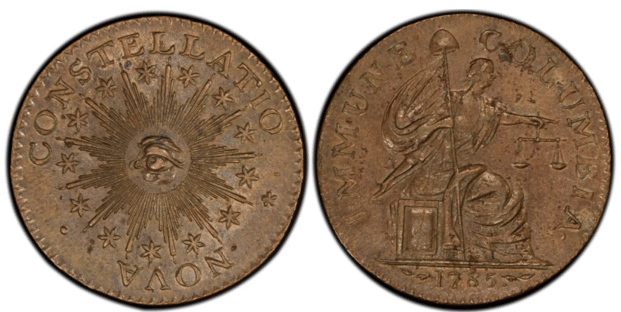
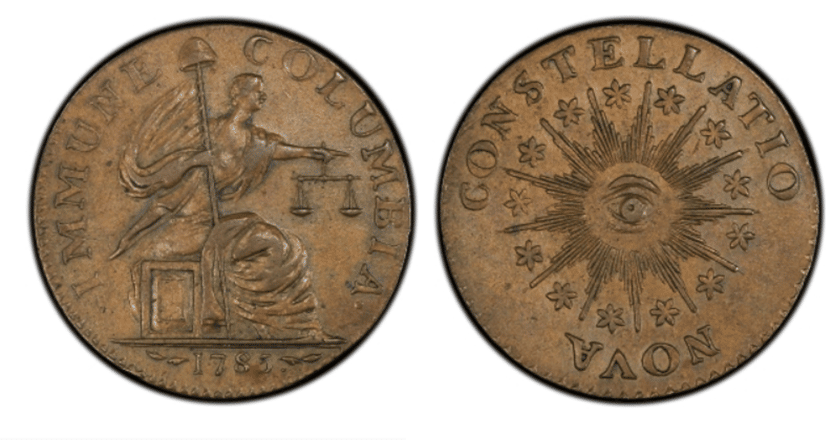
Major Types and What Survives
Experts disagree on how to group the 1785 Immune Columbia issues due to several major pairings and metals. The exact count of ‘principal varieties’ depends on the cataloging system, but some highlight five headline types, while others list additional major subtypes and edge and metal variants.
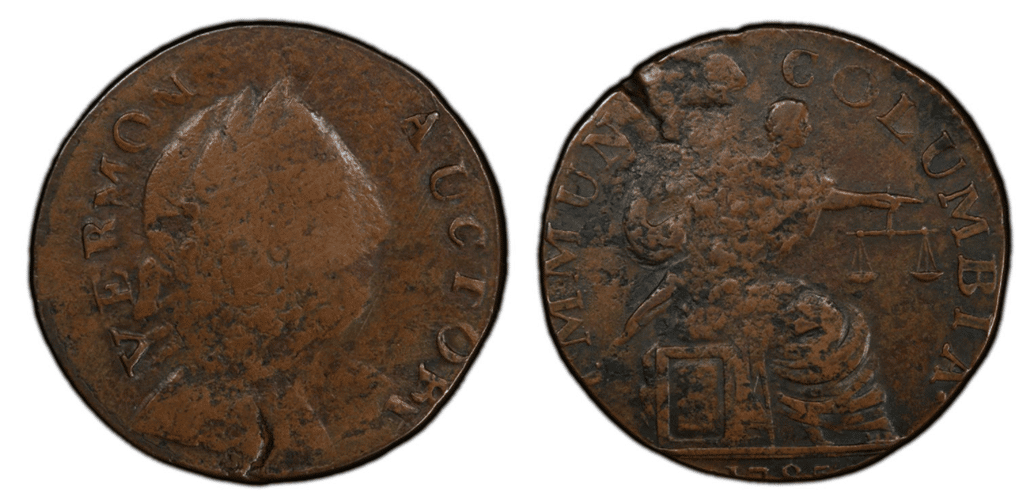
First is the Vermont Immune Columbia copper. This is the piece most directly associated with the “Vermont” label in modern catalogs and is exceptionally rare, with roughly 35-40 specimens estimated across the issue. Survivors are usually well worn, with Very Fine often cited as the practical “condition census” level.
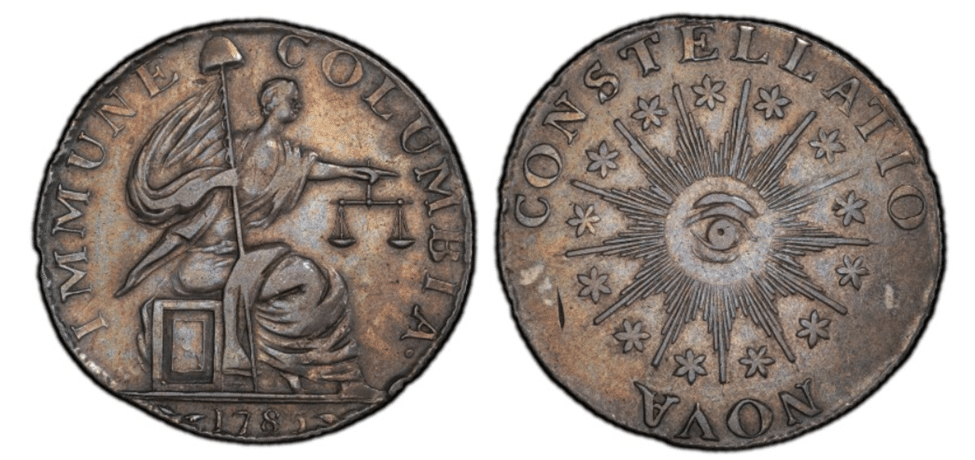
Second is the “13 Stars” Nova Constellatio style reverse paired with the Immune Columbia seated figure obverse. This type uses the Eye of Providence surrounded by rays and stars with “CONSTELLATIO NOVA” in the legend, and it is known in both copper and silver formats.
Third is a related Nova Constellatio pairing distinguished by a star positioned between CONSTELLATIO and NOVA, documented in copper and, in at least one case, a gold example described as unique in major references.
Fourth, the “Blunt Rays” variant is known from only two examples. It uses a blunt-ray execution of the Nova Constellatio style and is reported as two known examples in modern grading-service commentary.
Fifth is the Immune Columbia piece paired with a King George III theme, often described in modern references as “IMMUNE COLUMBIA” paired with the legend “CEORCIVS III” on the opposite side. This pairing combines American allegory with a British royal portrait, illustrating the transitional coinage ideas of the 1780s.
Taken together, Immune Columbia pieces are rare not only because of low survival, but because they represent coinage experimentation in real time. They are artifacts of a nation searching for the right symbols, the right metal, and the right authority to place behind its money.