
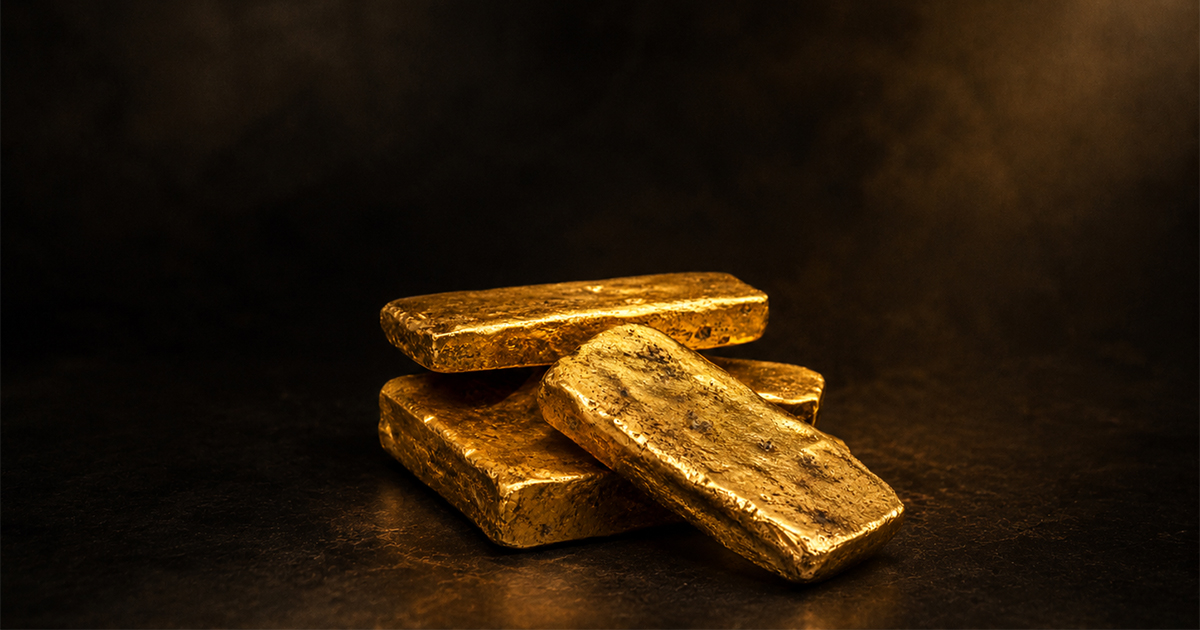
Gold doré bars are partially refined metal bars produced between the mining and final refining stages of the gold supply chain. A doré bar contains a mixture of precious metals, most often gold and silver, plus smaller amounts of copper and other base metals. The word doré comes from French and can mean “golden” or “gilded.” The name refers to the bar’s gold-colored appearance, not its purity.
Gold Doré Bars Are Semi-Pure Bars
Gold doré bars are often called semi-pure gold bars, but “semi-pure” is not an official fineness grade. There is no universal formula for how much gold or silver a doré bar must contain. One may be gold-rich, while another may contain considerably more silver.
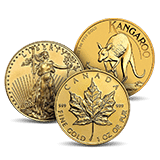
The exact mixture depends on the deposit’s geology and the mine’s recovery and smelting methods. Copper and other trace or base metals may also remain. Doré should not be described as pure gold or a pure alloy because it is a variable precious metal alloy that still requires refining. Finished investment products are different. Retail gold bars and coins are commonly refined to .999 or .9999 fineness.
How Are Gold Doré Bars Made and Refined?
Doré is no longer ore because most of the surrounding rock and waste have been removed. Its composition can vary by mine, deposit, and production batch, so its appearance and total weight do not reveal its actual gold content. The bars are sent to refineries for sampling, assaying, separation, and purification.
After a mine recovers precious metals from gold ore, the metal-rich material is smelted. The resulting molten gold-and-silver mixture is poured into molds and cooled to create doré bars. Uneven cooling, the shape of the mold, slag residue, oxidation, and the mixture of metals can produce rough textures, color variations, depressions, and irregular edges. At many large gold mines, this doré pour is the final production stage before the metal is transported to a refinery.
At the refinery, the bars are weighed, melted, and mixed to produce a uniform composition. This step is important because a sample taken from poorly mixed metal might not represent the entire deposit. Representative samples are analyzed to measure the gold, silver, and base-metal content. Refiners may use X-ray fluorescence for initial screening and fire assay for a more precise determination of precious-metal content. The refinery then separates the metals and removes impurities. The silver is separated from the gold and may be recovered as a valuable secondary product. It can then be refined and manufactured into silver bars, grain, coins, or other products. Refineries process and account for payable silver according to their individual commercial terms.
Producing gold doré bars lets mines consolidate valuable metals into a dense, secure form that is easier to transport than ore or other partially processed materials. A newly poured bar may have rough edges, discoloration, or simple mine markings. These are normal features of an industrial product and do not indicate a particular level of gold purity.
How Much Is a Gold Doré Bar Worth?
A doré bar’s value is based mainly on its recoverable gold and silver, not merely its gross weight. Two bars of the same size may have very different values if their metal contents differ.
A professional buyer calculates the estimated fine-gold weight using the verified bar weight and assay percentage. Silver is valued separately. Simply multiplying a doré bar’s total weight by the market price of pure gold would therefore produce an unreliable value. The bar must first be melted, sampled, and professionally assayed.
Gold Doré Bars vs. Gold Bullion Bars
The central difference is the stage of production. Doré is refinery feed with variable purity, while gold bars and other gold bullion are a finished product made to a declared weight and fineness.
Recognized bullion bars usually carry identifying information such as the refiner’s stamp, fineness, serial number, and production date. LBMA Good Delivery gold bars must have a minimum fineness of 995 parts per thousand and meet detailed marking and manufacturing requirements. Doré may carry mine or batch markings, but those do not provide the same standardized assurance.
Finished bullion is generally easier to authenticate, insure, price, store, and resell. A supposed doré bar can also be misrepresented. A dishonest seller may exaggerate its gold content, supply a false assay report, conceal lower-value metal, or offer material of an unverifiable origin. Surface testing, photographs, and seller-provided paperwork do not replace representative sampling, laboratory analysis, and ownership verification.
Should Investors Buy Gold Doré Bars?
Most individual investors should not buy gold doré bars. They are intended mainly for refineries and specialized precious-metals companies with professional assaying equipment, secure transportation, insurance, regulatory controls, and the ability to recover and separate the metals.
Doré may be appropriate for a refinery, mining company, industrial buyer, or qualified commercial trader purchasing it as raw material. A collector might buy a small, documented specimen for educational or historical interest, but it should be treated as a specimen rather than a standard gold investment.
Consumers seeking physical gold for savings, portfolio diversification, or wealth preservation are generally better served by recognized gold bullion bars or coins. Finished bullion provides a stated weight and purity, clearer pricing, wider dealer acceptance, and a more established resale market.
Some specialized precious-metals buyers may evaluate doré, but many retail bullion dealers concentrate on finished bars, coins, and jewelry. A doré owner will often need an approved commercial relationship with a refinery or industrial buyer.
Buyers should be especially cautious of unsolicited offers for “discounted” doré, overseas transactions requiring advance fees, or sellers who claim that professional assays are unnecessary. Legitimate mined gold should have verifiable ownership, origin, chain-of-custody records, and required export or customs documentation. Responsible-sourcing checks also help address supply-chain risks involving corruption, conflict, financial crime, human-rights abuses, and environmental harm.
Conclusion: Are Gold Doré Bars a Good Buy?
For the average buyer, gold doré bars are not a good investment choice. Their uncertain purity, specialized testing requirements, refining costs, limited resale options, and sourcing risks make them far more complicated than finished bullion. Doré serves an important industrial purpose: moving concentrated gold and silver from a mine to a refinery. It is not designed as a retail investment product.
People who want to own physical gold should generally choose .999 or .9999 fine bullion from a recognized mint or refinery and purchase it through an established precious-metals dealer. Doré bars make sense primarily for professionals who can verify the metal content, lawful origin, and full processing costs before completing a transaction.
This article is provided for educational and informational purposes only and should not be considered financial, investment, legal, tax, or customs advice. Precious-metals prices fluctuate, and neither the value nor resale of any gold product is guaranteed.