New Customer? Get Gold or Silver at Spot!

Territorial Values

Before 1857, U.S. coinage was not the only legal tender in the United States. This led to many foreign coins and private issues circulating alongside U.S. money. Even after 1857, some smaller private issues and state coins saw use in the Western U.S. states where Precious Metal coins were harder to come by. Private coins were usually struck to service a shortage in U.S. coinage. Most of these coins are incredibly rare due to low mintages. 

Learn about Machin’s Mills, an unauthorized late-18th-century mint in New York that produced large quantities of imitation British halfpennies and other coins to fill chronic shortages of small change after the American Revolution.
From landscape scenes to British-style imitations, these Vermont Coppers minted from 1785 to 1788 trace a fascinating design transition.
Learn more about how Brasher Gold Doubloons helped shape early American coinage.

All Territorial Values Resources

Wass, Molitor & Co. (1852 – 1855)

Wass, Molitor & Co. operated an assay office in the early 1850s and issued private gold coins in several denominations in San Francisco. Learn about

United States Assay Office of Gold

The United States Assay Office of Gold helped ease California’s coin shortage. Learn more about how quasi-official issues bridged the gap until the San Francisco

Pacific Company (1849)

The Pacific Company was established in California in 1849 to strike gold coins during the Gold Rush. Learn more about how their name lived on

Oregon Exchange Company (1849)

In 1849, the Oregon Exchange Company struck $5 and $10 gold coins to fill a shortage of federal money in the Oregon Territory, using native

Norris, Gregg & Norris (1849)

In 1849, Norris, Gregg & Norris struck some of the earliest California private $5 gold coins. Learn more about why these Half Eagles became a

Mormon Gold (1849-1860)

California gold didn’t just fuel San Francisco, some of the earliest coins struck during the Gold Rush were minted by the Latter-day Saints in Salt

1849 & 1852 Moffat & Co. Gold Coins and Moffat-Humbert Issues

Learn why Moffat & Co. is recognized as one of the most important and accurate assay offices during the California Gold Strike.

Miner’s Bank Gold Coins

The Miner’s Bank was among the earliest firms to issue private gold coins in California during the first year of the Gold Rush. Learn how

Massachusetts & California Co.

The Massachusetts & California Company planned to strike Gold Rush coinage in 1849, but their rare $5 gold coins were likely made in Massachusetts instead.

Kellogg & Co.

Learn more about how Kellogg & Company’s brief but important private minting operation helped stabilize San Francisco’s gold-based economy.

John Parsons & Co.

Learn more about famously rare coins from John Parsons & Co. and the believed location of the Mint.

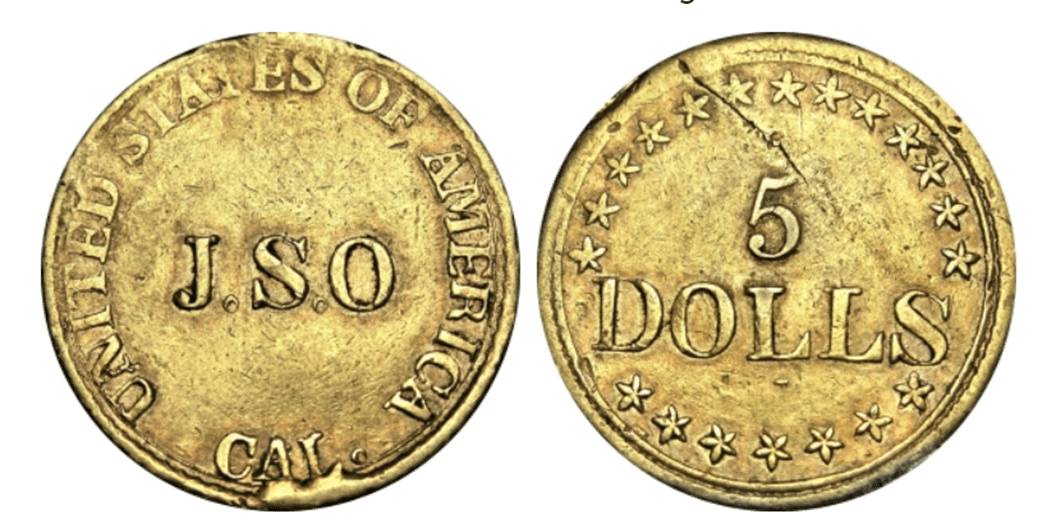
J. S. Ormsby & Company

J. S. Ormsby & Company briefly struck private gold coins in Sacramento in late 1849. Learn more about why only five Ormsby gold coins are

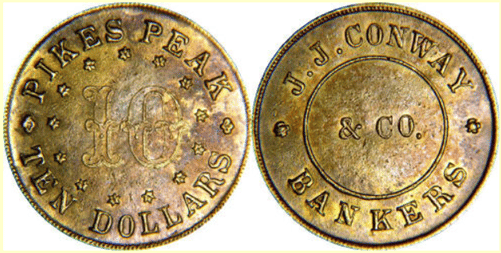
J. J. Conway & Company

Learn about Conway’s short-lived Georgia Gulch operation and why these emergency-era coins are among the great rarities of early Colorado gold.

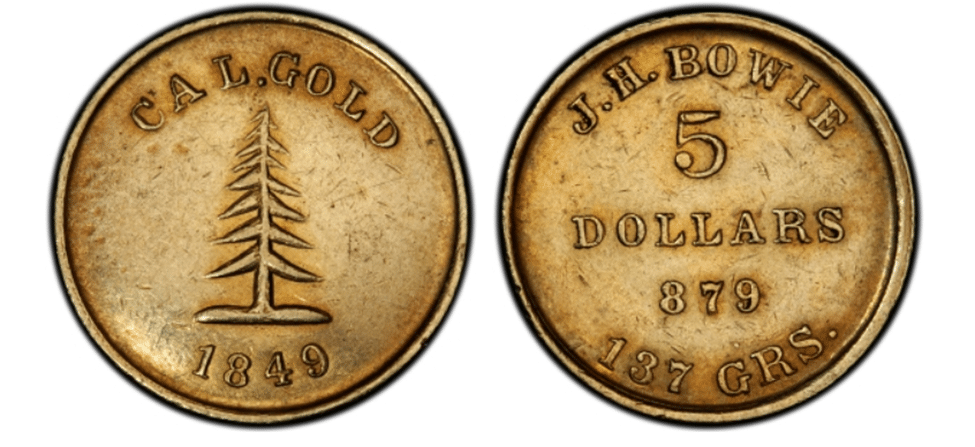
J. H. Bowie Company

Joseph H. Bowie, a member of the extended Bowie family, produced one of the rarest California Gold Rush coins in 1849. Learn more about Bowie’s

Dunbar & Co.

Edward Dunbar struck $5 gold pieces in Gold Rush–era San Francisco, crafting coins that looked so close to federal designs that merchants eagerly accepted them.

Dubosq & Company

Learn about Dubosq & Company, a short-lived private assayer active during the early California Gold Rush that produced rare private-issue gold pieces in 1850.

Clark, Gruber & Company

Long before Denver had a U.S. Mint, Clark, Gruber & Co. was turning freshly mined Pike’s Peak gold into coins that circulated throughout Colorado. Learn

Cincinnati Mining & Trading Co.

Learn how the Cincinnati Mining & Trading Company is associated with a very small group of private-issue gold pieces that were intended for use during

1850 Baldwin & Co. Gold Coins

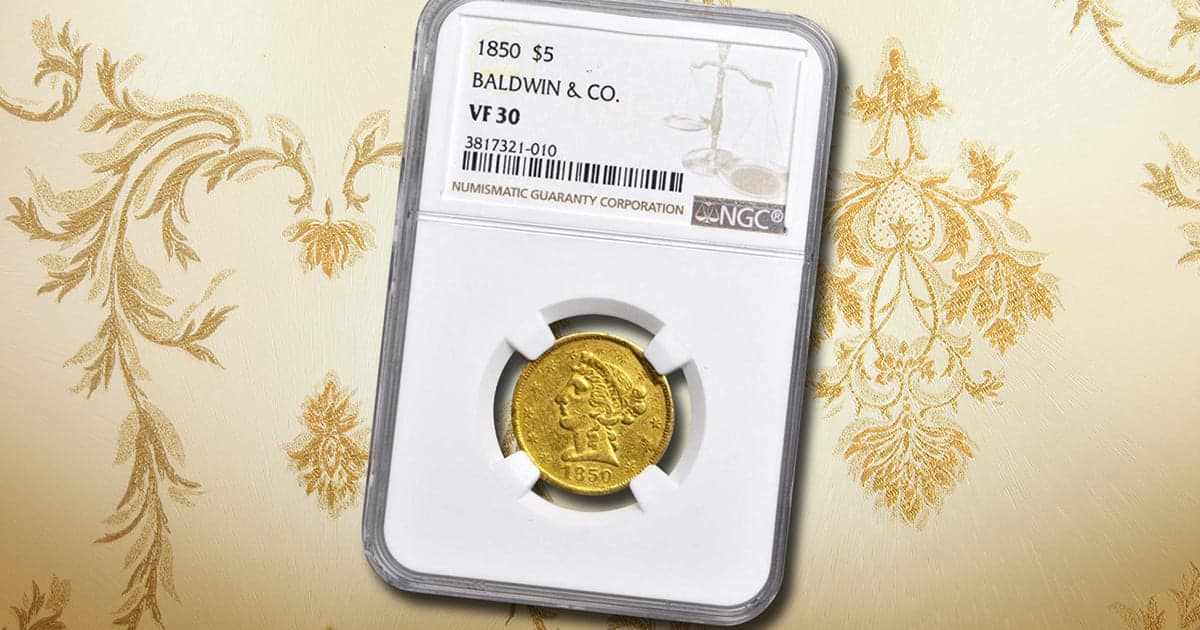
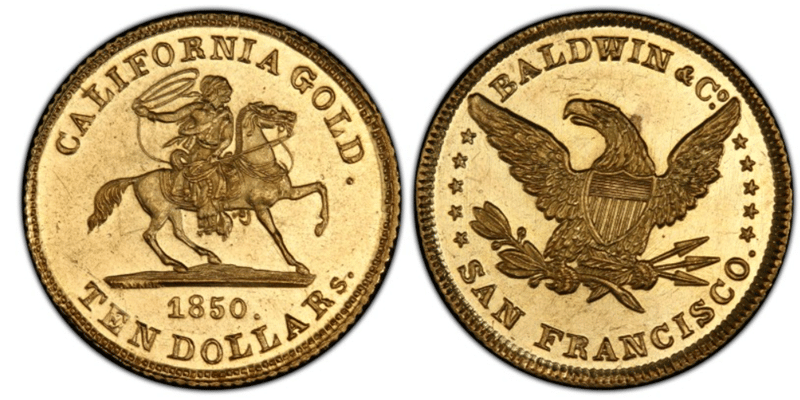
Baldwin & Co. stepped into Gold Rush–era San Francisco’s coin shortage and provided four privately issued coins and a “horseman” $10 piece.

Augustus Humbert’s 1851 50 Dollar “Slugs”

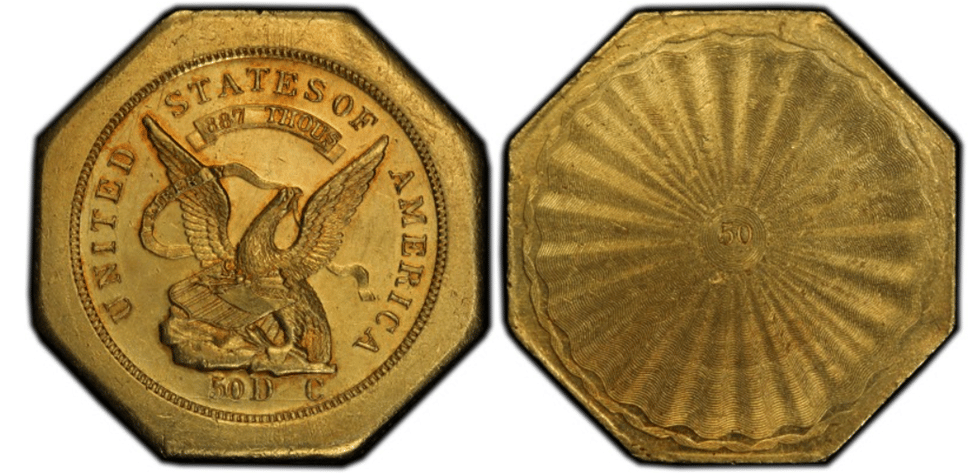
Learn how Augustus Humbert’s massive octagonal $50 “slugs” were born out of the California Gold Rush.

Templeton Reid Georgia & California Gold Coins

Templeton Reid struck some of America’s earliest private gold coins in the 1830s.
Wass, Molitor & Co. operated an assay office in the early 1850s and issued private gold coins in several denominations in San Francisco. Learn about how their coins earned public confidence and circulated successfully alongside federal issues.
The United States Assay Office of Gold helped ease California’s coin shortage. Learn more about how quasi-official issues bridged the gap until the San Francisco Mint began striking federal gold coins in 1854.
The Pacific Company was established in California in 1849 to strike gold coins during the Gold Rush. Learn more about how their name lived on through hand-struck gold coins made from their original dies.
In 1849, the Oregon Exchange Company struck $5 and $10 gold coins to fill a shortage of federal money in the Oregon Territory, using native gold and locally made dies. Learn about how these short-lived gold coins circulated widely despite crude workmanship and a mint that operated for only a few months.
In 1849, Norris, Gregg & Norris struck some of the earliest California private $5 gold coins. Learn more about why these Half Eagles became a standout symbol of Gold Rush-era commerce and improvisation.
California gold didn’t just fuel San Francisco, some of the earliest coins struck during the Gold Rush were minted by the Latter-day Saints in Salt Lake City. Read to learn more about the short-lived “Mormon gold” series, its unusual designs, and why many pieces were later discounted and melted outside the community.
Learn why Moffat & Co. is recognized as one of the most important and accurate assay offices during the California Gold Strike.
The Miner’s Bank was among the earliest firms to issue private gold coins in California during the first year of the Gold Rush. Learn how assay problems and loss of public confidence quickly dissolved the bank.
The Massachusetts & California Company planned to strike Gold Rush coinage in 1849, but their rare $5 gold coins were likely made in Massachusetts instead. Learn more about this short-lived private mint and the coins left behind.
Learn more about how Kellogg & Company’s brief but important private minting operation helped stabilize San Francisco’s gold-based economy.
Learn more about famously rare coins from John Parsons & Co. and the believed location of the Mint.
J. S. Ormsby & Company briefly struck private gold coins in Sacramento in late 1849. Learn more about why only five Ormsby gold coins are known to survive today and what they reveal about the risks of early Gold Rush minting.
Learn about Conway’s short-lived Georgia Gulch operation and why these emergency-era coins are among the great rarities of early Colorado gold.
Joseph H. Bowie, a member of the extended Bowie family, produced one of the rarest California Gold Rush coins in 1849. Learn more about Bowie’s brief role in early private gold coinage and the coin he produced.
Edward Dunbar struck $5 gold pieces in Gold Rush–era San Francisco, crafting coins that looked so close to federal designs that merchants eagerly accepted them. Learn more about how even his accurately made coins were swept up in the era’s distrust and largely lost to melting.
Learn about Dubosq & Company, a short-lived private assayer active during the early California Gold Rush that produced rare private-issue gold pieces in 1850.
Long before Denver had a U.S. Mint, Clark, Gruber & Co. was turning freshly mined Pike’s Peak gold into coins that circulated throughout Colorado. Learn about the rare survivors from the earliest days of Rocky Mountain gold rush commerce.
Learn how the Cincinnati Mining & Trading Company is associated with a very small group of private-issue gold pieces that were intended for use during the California Gold Rush.
Baldwin & Co. stepped into Gold Rush–era San Francisco’s coin shortage and provided four privately issued coins and a “horseman” $10 piece.
Learn how Augustus Humbert’s massive octagonal $50 “slugs” were born out of the California Gold Rush.
Templeton Reid struck some of America’s earliest private gold coins in the 1830s.
Wass, Molitor & Co. operated an assay office in the early 1850s and issued private gold coins in several denominations in San Francisco. Learn about
The United States Assay Office of Gold helped ease California’s coin shortage. Learn more about how quasi-official issues bridged the gap until the San Francisco
The Pacific Company was established in California in 1849 to strike gold coins during the Gold Rush. Learn more about how their name lived on
In 1849, the Oregon Exchange Company struck $5 and $10 gold coins to fill a shortage of federal money in the Oregon Territory, using native
In 1849, Norris, Gregg & Norris struck some of the earliest California private $5 gold coins. Learn more about why these Half Eagles became a
California gold didn’t just fuel San Francisco, some of the earliest coins struck during the Gold Rush were minted by the Latter-day Saints in Salt
Learn why Moffat & Co. is recognized as one of the most important and accurate assay offices during the California Gold Strike.
The Miner’s Bank was among the earliest firms to issue private gold coins in California during the first year of the Gold Rush. Learn how
The Massachusetts & California Company planned to strike Gold Rush coinage in 1849, but their rare $5 gold coins were likely made in Massachusetts instead.
Learn more about how Kellogg & Company’s brief but important private minting operation helped stabilize San Francisco’s gold-based economy.
Learn more about famously rare coins from John Parsons & Co. and the believed location of the Mint.
J. S. Ormsby & Company briefly struck private gold coins in Sacramento in late 1849. Learn more about why only five Ormsby gold coins are
Learn about Conway’s short-lived Georgia Gulch operation and why these emergency-era coins are among the great rarities of early Colorado gold.
Joseph H. Bowie, a member of the extended Bowie family, produced one of the rarest California Gold Rush coins in 1849. Learn more about Bowie’s
Edward Dunbar struck $5 gold pieces in Gold Rush–era San Francisco, crafting coins that looked so close to federal designs that merchants eagerly accepted them.
Learn about Dubosq & Company, a short-lived private assayer active during the early California Gold Rush that produced rare private-issue gold pieces in 1850.
Long before Denver had a U.S. Mint, Clark, Gruber & Co. was turning freshly mined Pike’s Peak gold into coins that circulated throughout Colorado. Learn
Learn how the Cincinnati Mining & Trading Company is associated with a very small group of private-issue gold pieces that were intended for use during
Baldwin & Co. stepped into Gold Rush–era San Francisco’s coin shortage and provided four privately issued coins and a “horseman” $10 piece.
Learn how Augustus Humbert’s massive octagonal $50 “slugs” were born out of the California Gold Rush.
Templeton Reid struck some of America’s earliest private gold coins in the 1830s.

Wass, Molitor & Co. (1852 – 1855)

Wass, Molitor & Co. operated an assay office in the early 1850s and issued private gold coins in several denominations in San Francisco. Learn about how their coins earned public confidence and circulated successfully alongside federal issues.

United States Assay Office of Gold

The United States Assay Office of Gold helped ease California’s coin shortage. Learn more about how quasi-official issues bridged the gap until the San Francisco Mint began striking federal gold coins in 1854.

Pacific Company (1849)

The Pacific Company was established in California in 1849 to strike gold coins during the Gold Rush. Learn more about how their name lived on through hand-struck gold coins made from their original dies.

Oregon Exchange Company (1849)

In 1849, the Oregon Exchange Company struck $5 and $10 gold coins to fill a shortage of federal money in the Oregon Territory, using native gold and locally made dies. Learn about how these short-lived gold coins circulated widely despite crude workmanship and a mint that operated for only a few months.

Norris, Gregg & Norris (1849)

In 1849, Norris, Gregg & Norris struck some of the earliest California private $5 gold coins. Learn more about why these Half Eagles became a standout symbol of Gold Rush-era commerce and improvisation.

Mormon Gold (1849-1860)

California gold didn’t just fuel San Francisco, some of the earliest coins struck during the Gold Rush were minted by the Latter-day Saints in Salt Lake City. Read to learn more about the short-lived “Mormon gold” series, its unusual designs, and why many pieces were later discounted and melted outside the community.

1849 & 1852 Moffat & Co. Gold Coins and Moffat-Humbert Issues

Learn why Moffat & Co. is recognized as one of the most important and accurate assay offices during the California Gold Strike.

Miner’s Bank Gold Coins

The Miner’s Bank was among the earliest firms to issue private gold coins in California during the first year of the Gold Rush. Learn how assay problems and loss of public confidence quickly dissolved the bank.

Massachusetts & California Co.

The Massachusetts & California Company planned to strike Gold Rush coinage in 1849, but their rare $5 gold coins were likely made in Massachusetts instead. Learn more about this short-lived private mint and the coins left behind.

Kellogg & Co.

Learn more about how Kellogg & Company’s brief but important private minting operation helped stabilize San Francisco’s gold-based economy.

John Parsons & Co.

Learn more about famously rare coins from John Parsons & Co. and the believed location of the Mint.

J. S. Ormsby & Company

J. S. Ormsby & Company briefly struck private gold coins in Sacramento in late 1849. Learn more about why only five Ormsby gold coins are known to survive today and what they reveal about the risks of early Gold Rush minting.

J. J. Conway & Company

Learn about Conway’s short-lived Georgia Gulch operation and why these emergency-era coins are among the great rarities of early Colorado gold.

J. H. Bowie Company

Joseph H. Bowie, a member of the extended Bowie family, produced one of the rarest California Gold Rush coins in 1849. Learn more about Bowie’s brief role in early private gold coinage and the coin he produced.

Dunbar & Co.

Edward Dunbar struck $5 gold pieces in Gold Rush–era San Francisco, crafting coins that looked so close to federal designs that merchants eagerly accepted them. Learn more about how even his accurately made coins were swept up in the era’s distrust and largely lost to melting.

Dubosq & Company

Learn about Dubosq & Company, a short-lived private assayer active during the early California Gold Rush that produced rare private-issue gold pieces in 1850.

Clark, Gruber & Company

Long before Denver had a U.S. Mint, Clark, Gruber & Co. was turning freshly mined Pike’s Peak gold into coins that circulated throughout Colorado. Learn about the rare survivors from the earliest days of Rocky Mountain gold rush commerce.

Cincinnati Mining & Trading Co.

Learn how the Cincinnati Mining & Trading Company is associated with a very small group of private-issue gold pieces that were intended for use during the California Gold Rush.

1850 Baldwin & Co. Gold Coins

Baldwin & Co. stepped into Gold Rush–era San Francisco’s coin shortage and provided four privately issued coins and a “horseman” $10 piece.

Augustus Humbert’s 1851 50 Dollar “Slugs”

Learn how Augustus Humbert’s massive octagonal $50 “slugs” were born out of the California Gold Rush.

Templeton Reid Georgia & California Gold Coins

Templeton Reid struck some of America’s earliest private gold coins in the 1830s.

More Guides for You

What is Bullion?

Gold, Silver, Platinum, and Palladium all come in various forms and sizes to create a variety of options for investors and collectors.  
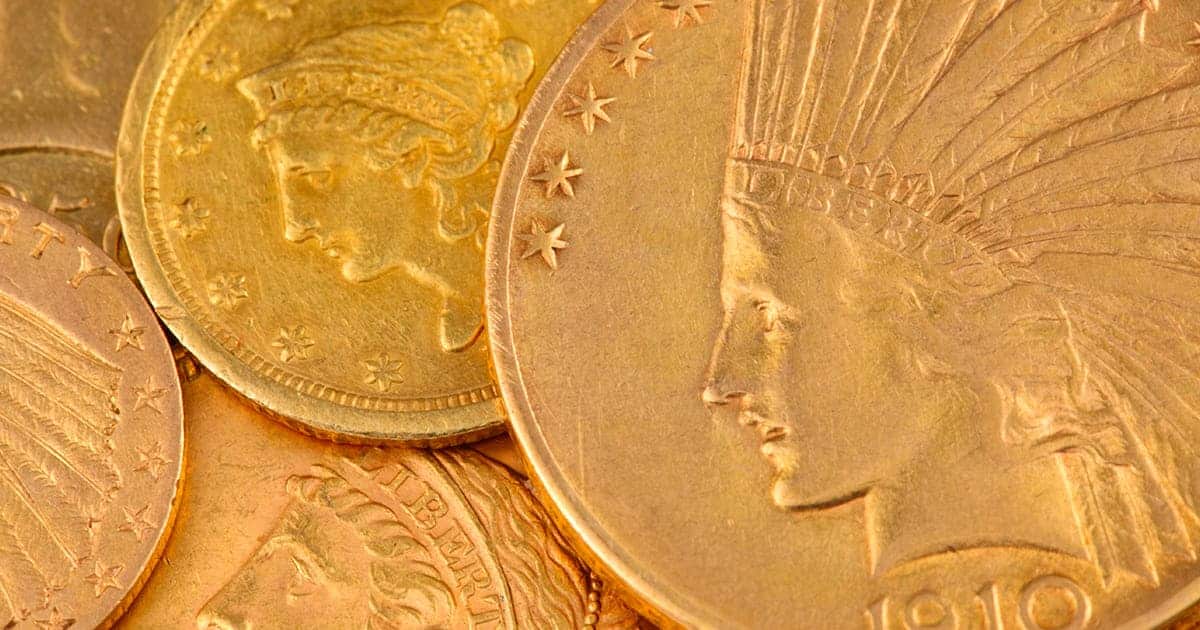
What is an Eagle?

Since the U.S. Mint’s American Eagle program began in 1986, Gold and Silver Eagles have remained a popular choice among both investors and collectors