


Colonial Values
Early American money – such as colonial, post-colonial and continental coins – was a much more chaotic affair than the system we have in place today. Many coins from this time period are very rare and expensive.
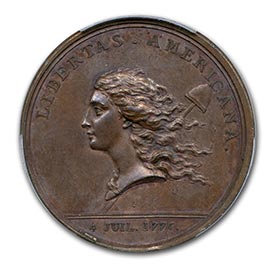
“1781” Libertas Americana Medals
Designed from Benjamin Franklin’s concept and engraved in Paris, the 1781 Libertas Americana medal celebrates American independence and American-French partnership.
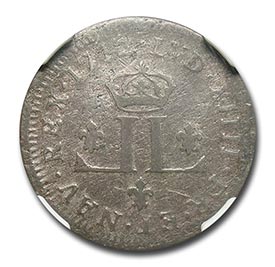
Counterstamped Coins
Learn about how counterstamping changed coinage use in the United States.
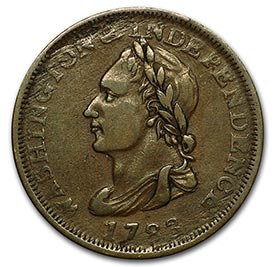
Washington Pieces
Washington-themed tokens and medals flooded both America and Britain after the American Revolution, reflecting his outsized fame even as the new nation lacked an official

Proposed National Issues – 1783-1792
Before the U.S. Mint began striking coins for circulation, several new coinage designs were considered for the young republic. The Nova Constellatio pieces and other

Post-1776 State Coinage & Private Regional Issues
Learn about how early America tried to mint its way into stability.
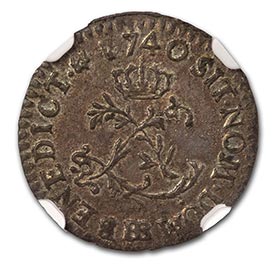
A Guide to French American Colonial Coins
French American Colonial coins have strong historical ties to the New World and the French territories. Discover how these coins were used and learn about
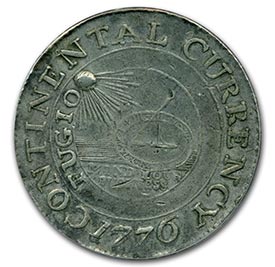
Pre-1776 State Coinage & Private Regional Issues
Several colonies experimented with their own money long before the U.S. gained its independence. Read to learn more.
Designed from Benjamin Franklin’s concept and engraved in Paris, the 1781 Libertas Americana medal celebrates American independence and American-French partnership.
Learn about how counterstamping changed coinage use in the United States.
Washington-themed tokens and medals flooded both America and Britain after the American Revolution, reflecting his outsized fame even as the new nation lacked an official
Before the U.S. Mint began striking coins for circulation, several new coinage designs were considered for the young republic. The Nova Constellatio pieces and other
Learn about how early America tried to mint its way into stability.
French American Colonial coins have strong historical ties to the New World and the French territories. Discover how these coins were used and learn about
Several colonies experimented with their own money long before the U.S. gained its independence. Read to learn more.
Washington Grate Halfpenny – 1793
Thomas Wyon’s 1793 Washington Grate Halfpenny is often collected alongside American colonial issues. Produced in multiple varieties, this British trade token occupies a recognized place in early American numismatics.
French Billon Coinage – 1709 – 1760
Learn about how France’s recession in the 17th century led to the striking of billon coinage in the country.
1787 Auctori Plebis Tokens
The mysterious 1787 Auctori Plebis Token circulated in colonial America and remains an intriguing example of early U.S. coinage. Learn why this token is a noteworthy addition to any colonial-era collection.
Wood’s Hibernia Coinage (1722-1724)
Wood’s Hibernia halfpennies and farthings were a royal-patent copper coinage that circulated outside Ireland, entering everyday trade in several colonial American ports.
Washington Born Virginia – 1792
With multiple edge styles and several rare varieties, the “President / Born in Virginia” tokens remain a notable offshoot of the Washington series.
Washington Cents – 1792
Struck in a few different metals and surviving in very small numbers, these pieces capture a pivotal moment in the debate over what early U.S. coins should look like.
The 1791 Washington Cent
1791 Washington cents quickly drew attention in early America. Their story hinges on an ambitious proposal and a decisive reaction that reshaped what U.S. coinage would become.
1783 ‘Unity States’ Washington & Independence Token
The 1783 “Unity States” token is a later Birmingham-made issue that circulated in the United States into the 19th century.
1784 Washington the Great “Ugly Head” Token
Learn about the a long-fueled debate over whether this token was a sincere tribute made from limited skill or an intentional bit of satire aimed at George Washington.
Washington Success Medals
Struck in two sizes with several die varieties, their uncertain purpose and relatively few known examples sustain continued interest among early American token collectors.
Washington North Wales Halfpenny – 1795
The 1795 Washington North Wales halfpennies were produced in England by Birmingham token makers. They are known minting a small set of reverse and edge varieties and incorrectly spelling George Washington’s name on every coin.
Washington Liberty and Security Tokens – 1795
The Washington Liberty and Security tokens are collected today for their several distinct varieties. However, Washington’s stated opposition to portraits on circulating coinage prevented any prospect of official adoption.
Getz Pattern Washington Cent – 1792
The 1792 Washington-Getz patterns were commissioned under Robert Morris and modeled on earlier Washington cent designs. Learn about the five known pattern types and the political push behind them, even as Washington’s portrait sparked renewed debate.
Washington Double Head Cent – (Undated)
Undated Double Head Washington cent’s long circulation history makes them a small but fascinating footnote in early American coinage.
Virginia Halfpennies – 1773 – 1774
Learn how these royal coppers soon became part of the complex history of early American coinage.
Theatre at New York – 1797
The 1797 Theatre at New York token is a standout large-format issue traced to Birmingham, England. Learn about the theatre that inspired the design and the people behind the creation of this token.
Talbot, Allum, & Lee Cents – 1794 – 1795
Learn how these store tokens crossed paths with the early U.S. Mint and became a distinctive chapter of post-Revolutionary coinage.
Standish Barry 3 Pence – 1790
The 1790 Standish Barry 3 Pence is a Baltimore-made silver mystery, with only a small number struck and even fewer known today.
St. Patrick or Newby Coinage – (1646-1660)
Mark Newby brought copper coins to colonial New Jersey, where they later gained legal tender status by the General Assembly. Learn about the halfpenny and farthing varieties with their unique designs.
Silver Center Cent – 1792
The 1792 Silver Center Cent was a bold early experiment at the brand-new U.S. Mint, sparked by Thomas Paine’s idea to blend copper and silver into a practical cent.
Rosa Americana Coinage – 1722 – 1733
William Wood’s Rosa Americana coinage was an early effort to supply the American colonies with bath metal halfpennies, pennies, and twopence under a royal patent. These rose-themed issues saw limited acceptance, which influenced their brief production run.
More Guides for You

What is Bullion?
Gold, Silver, Platinum, and Palladium all come in various forms and sizes to create a variety of options for investors and collectors.

What is an Eagle?
Since the U.S. Mint’s American Eagle program began in 1986, Gold and Silver Eagles have remained a popular choice among both investors and collectors